
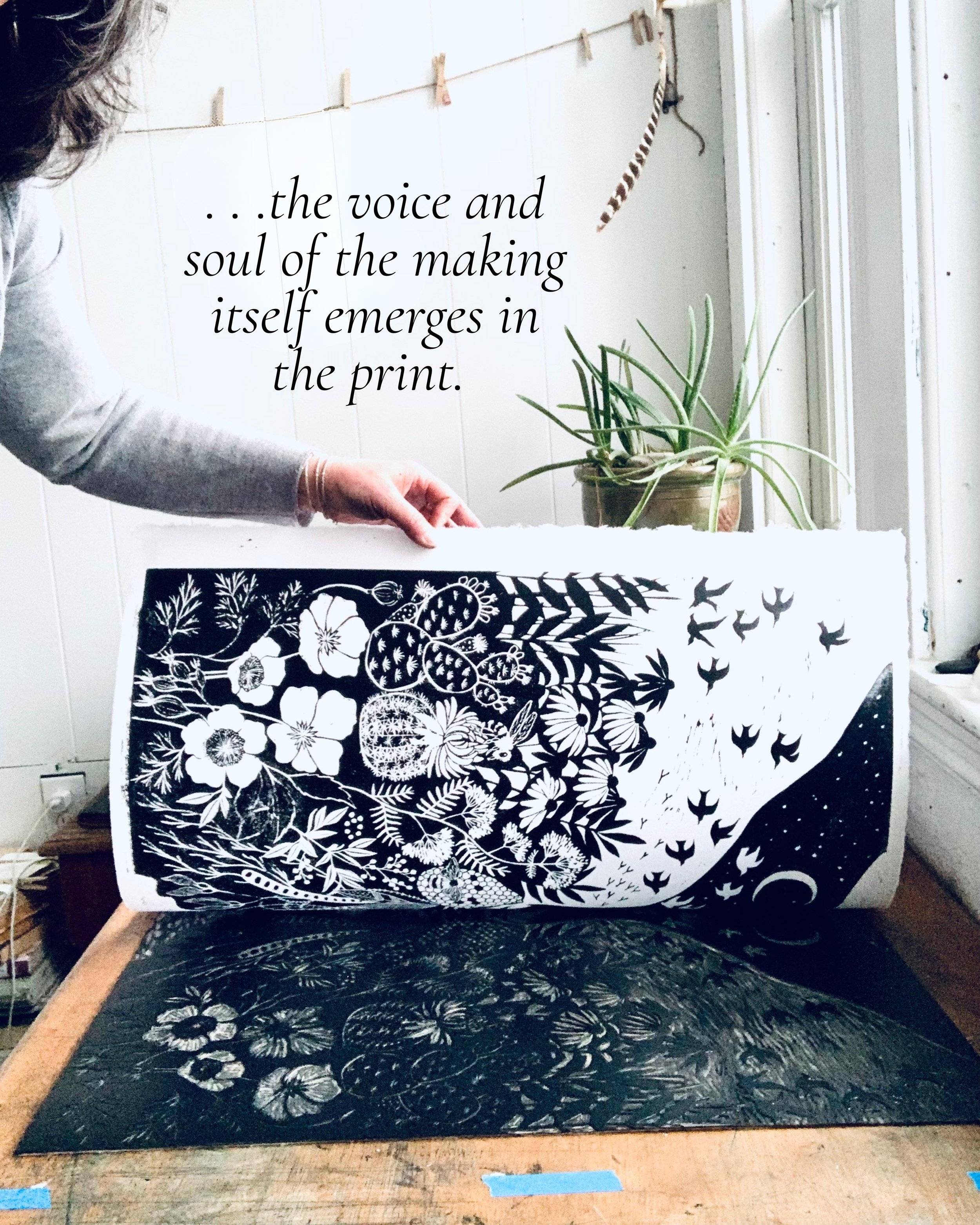
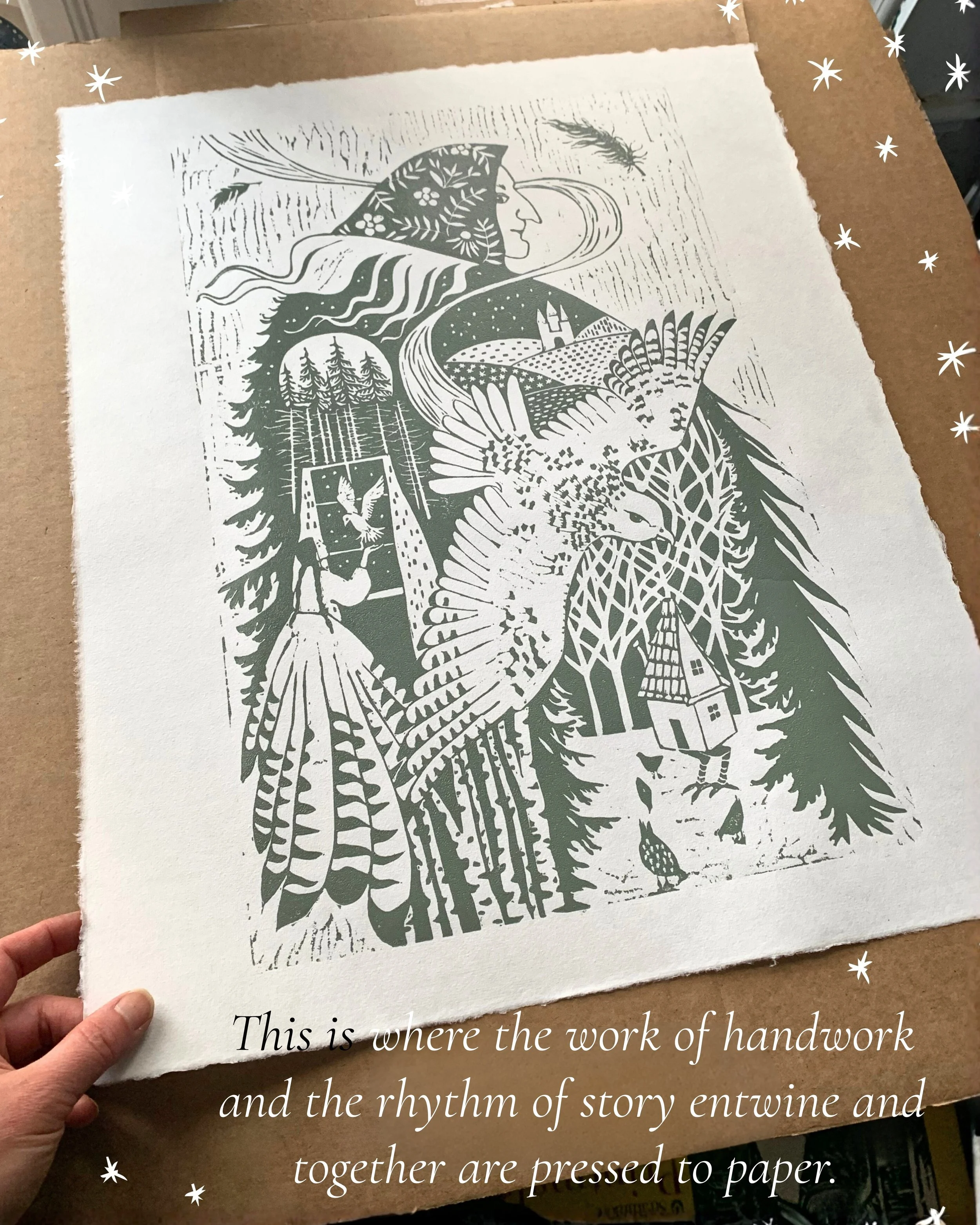
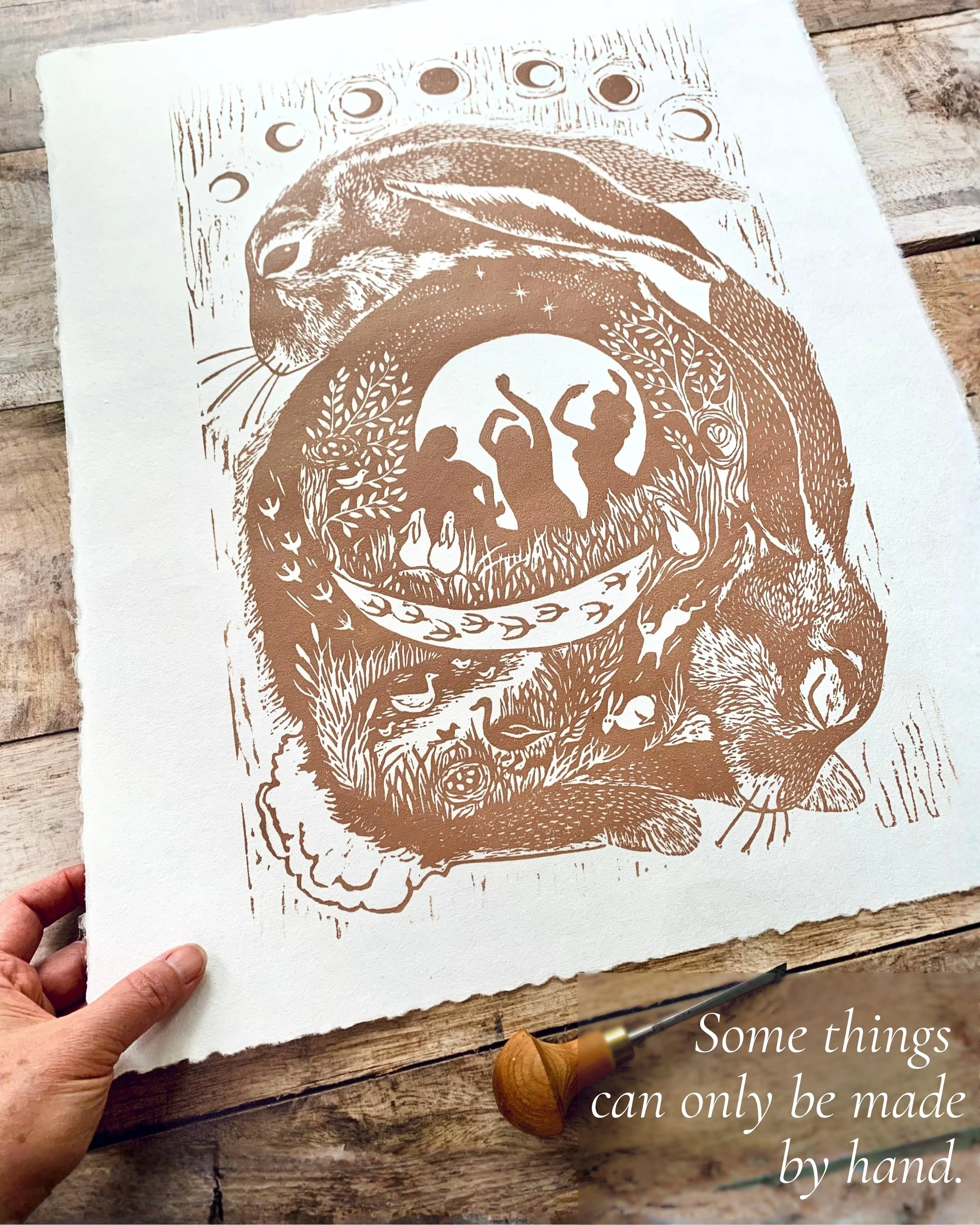
I've been thinking about what sets handmade prints apart. More than anything, it's this: a handmade print is more than the final image—it contains the story of its own making, pressed into paper.
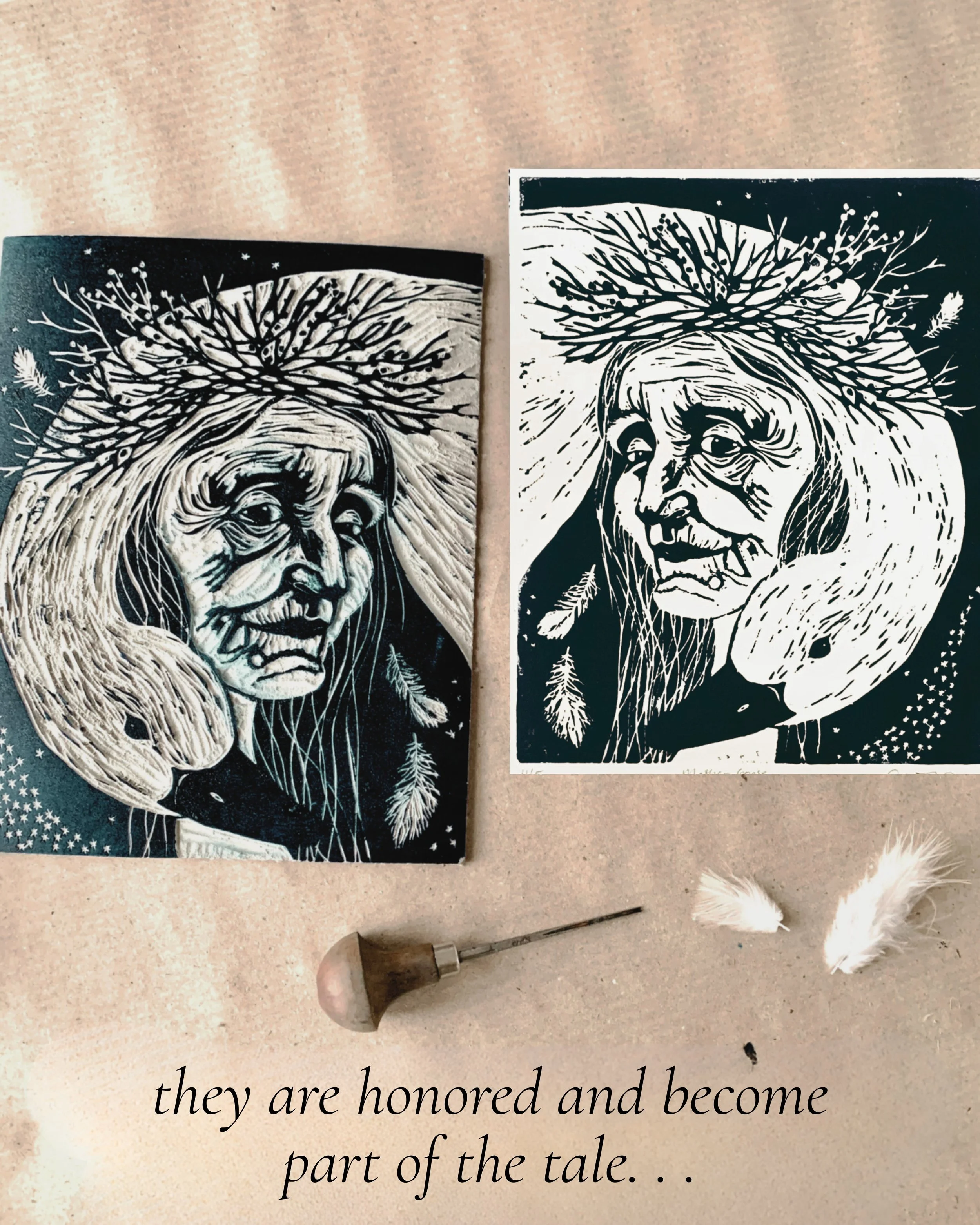
The labor isn't separate from the art; it's woven into its character. . . the rough edges, the textures, the slight emboss of hand pressure when printing. . . The marks of the hand are not hidden, they are honored and become part of the tale.
When you bring home a handmade print, you become a steward of an old magic, continuing the heartbeat of these ancient crafts. Both printmaking and storytelling are vessels of folk wisdom. One is crafted by hand, the other spoken by mouth—yet both carry the weight of timeless tradition and rustic charm.
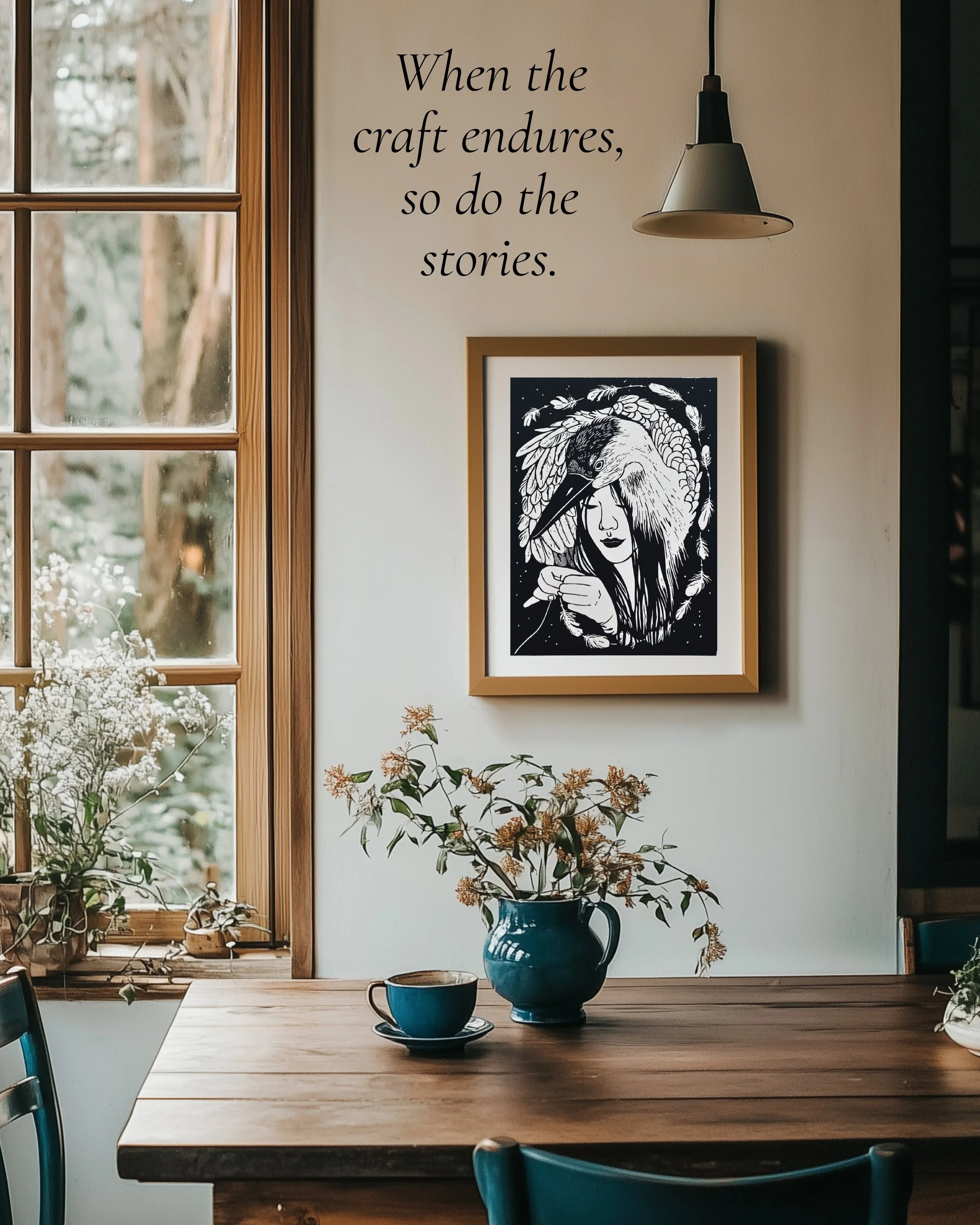
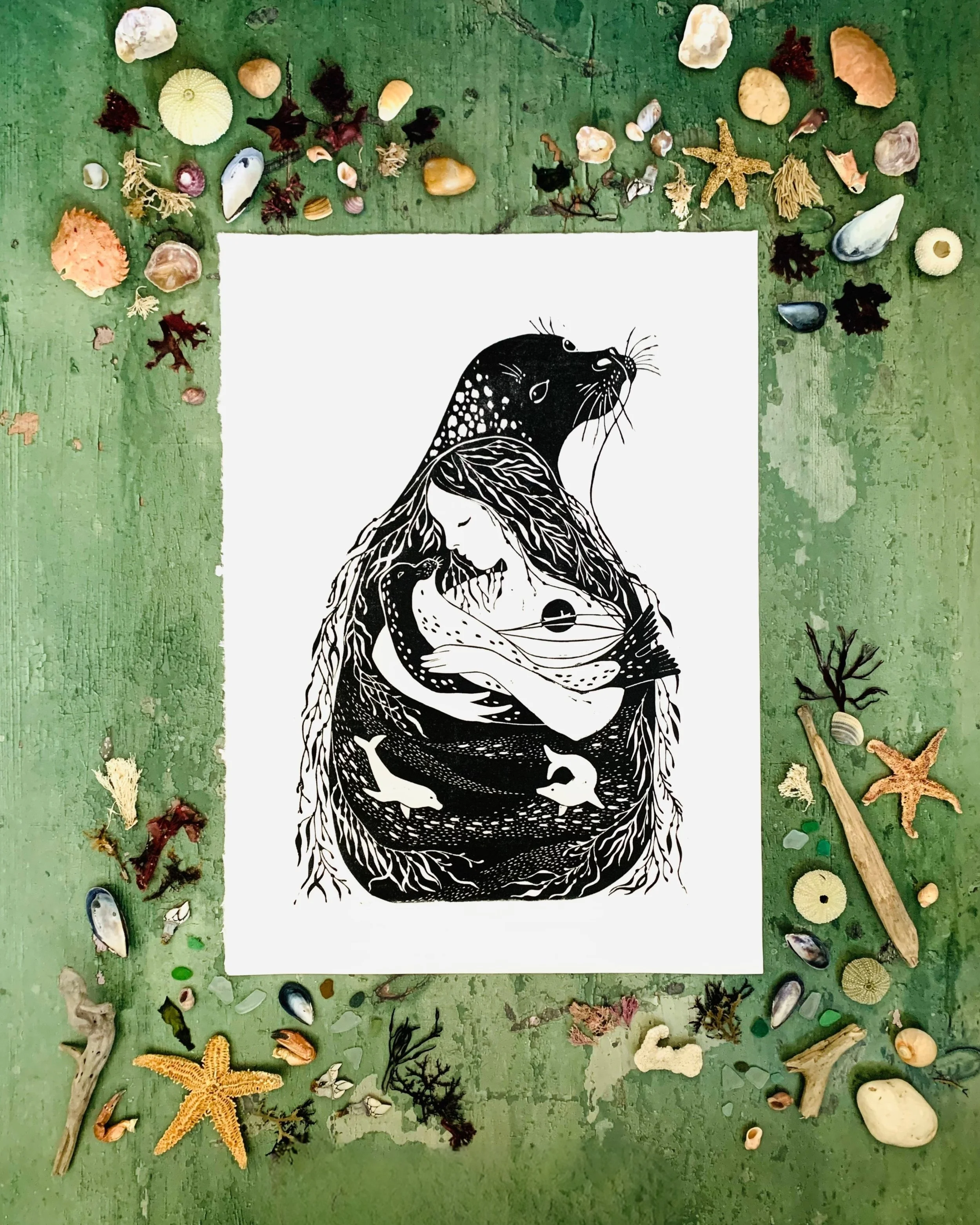
When the craft endures, so do the wild women who run with wolves, swim in their pelts, and fly with feathered wings - stories that remind us of our own wild power and belonging. In bringing a handcrafted print home, you become part of the quiet ritual of remembering. . .
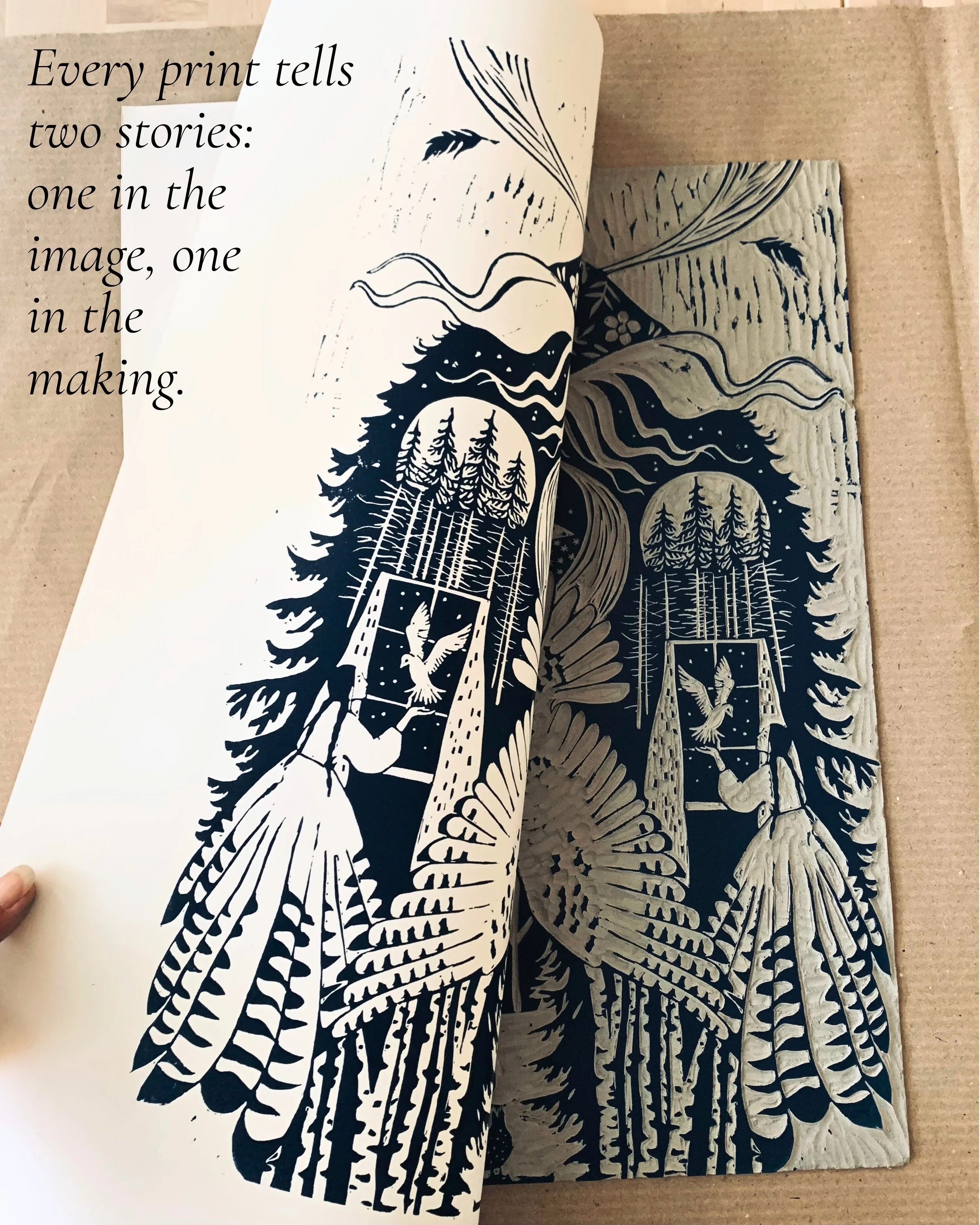
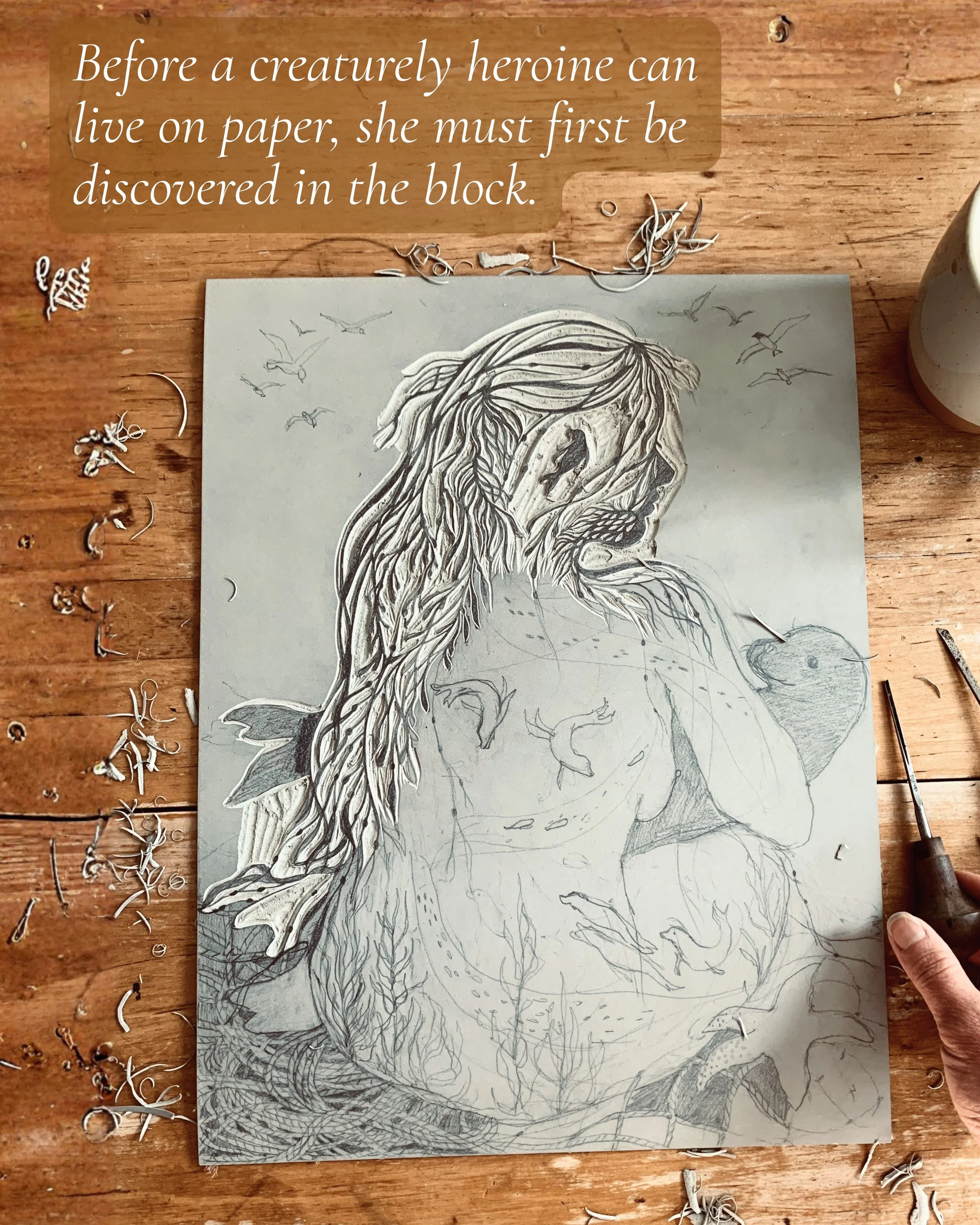
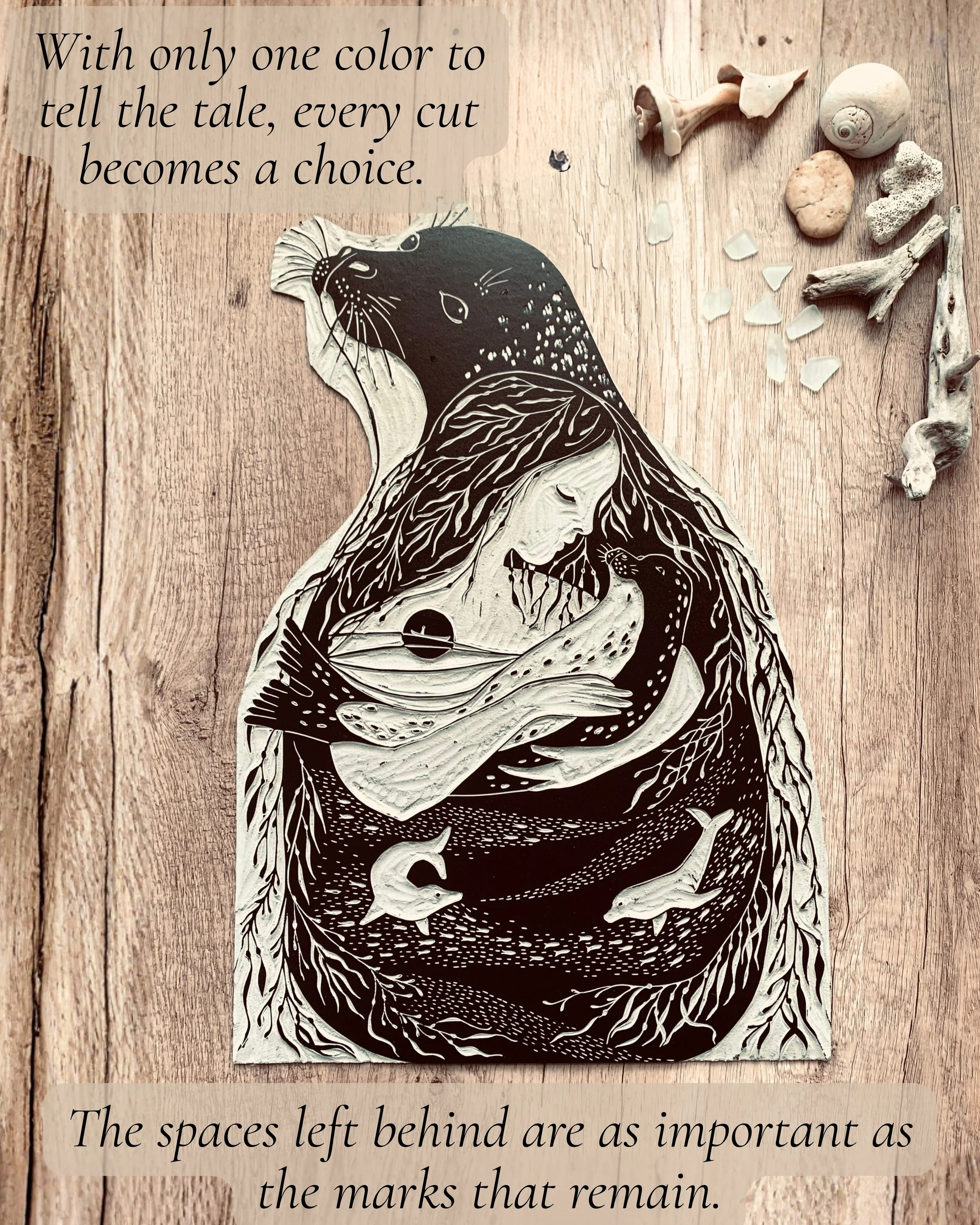
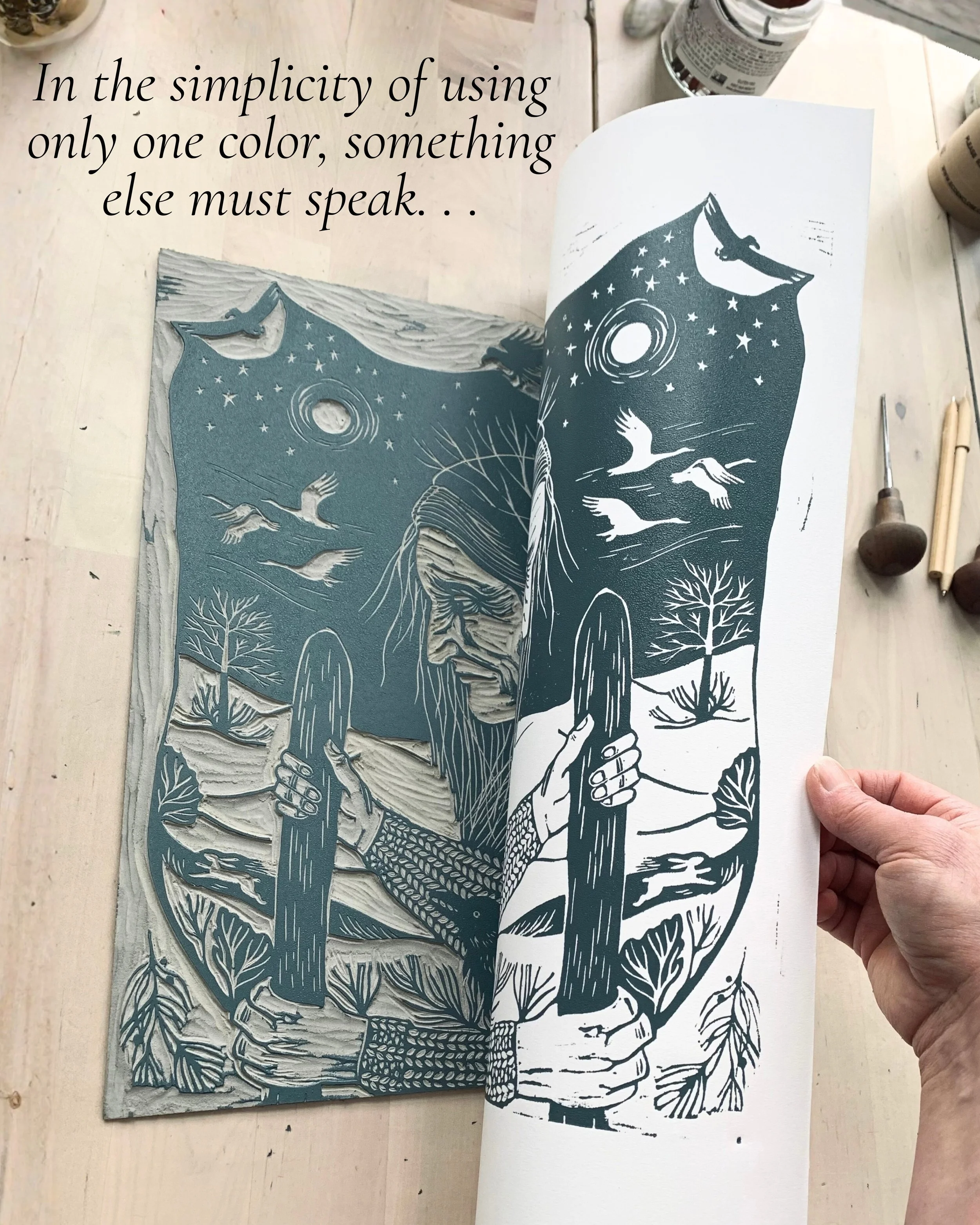
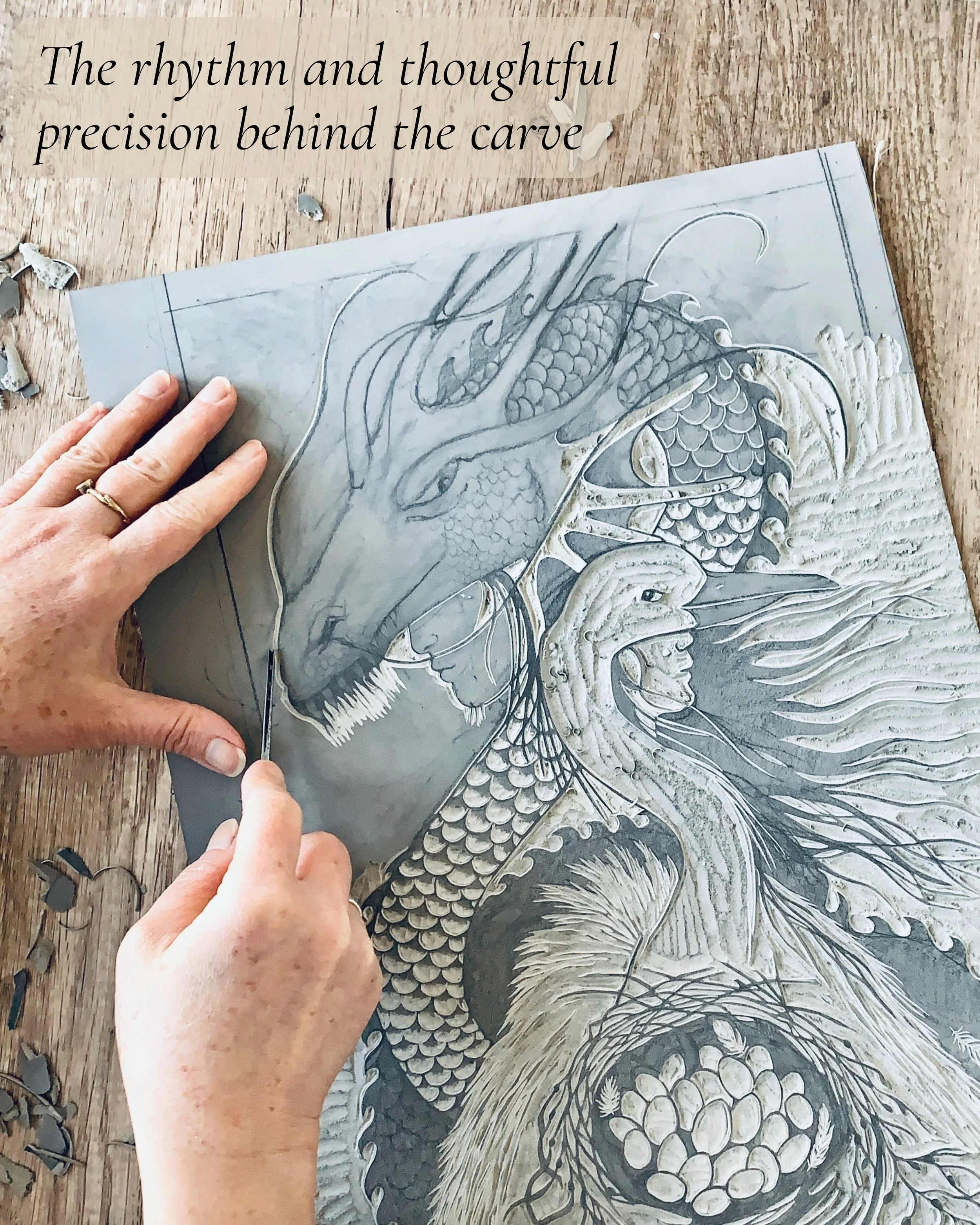
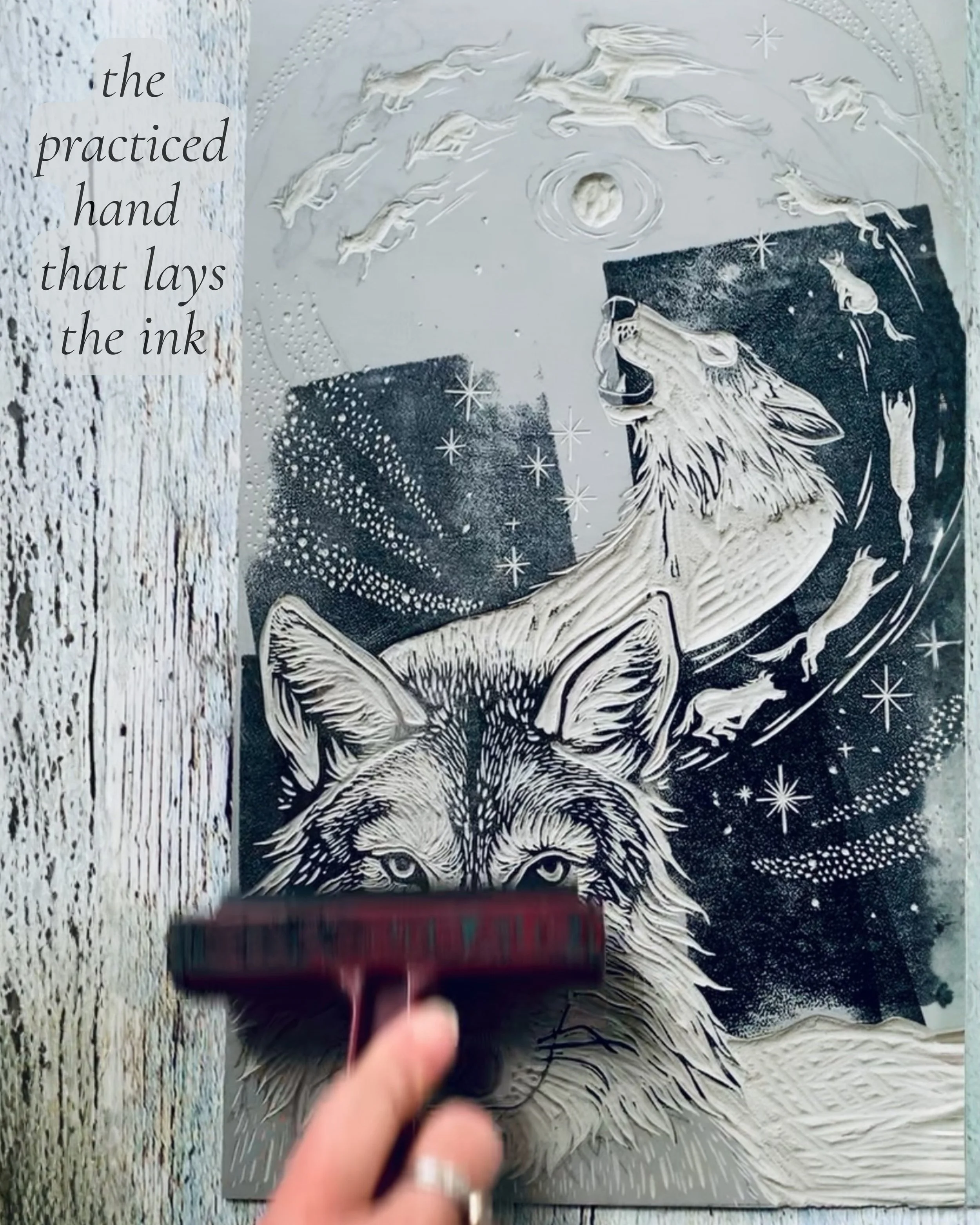
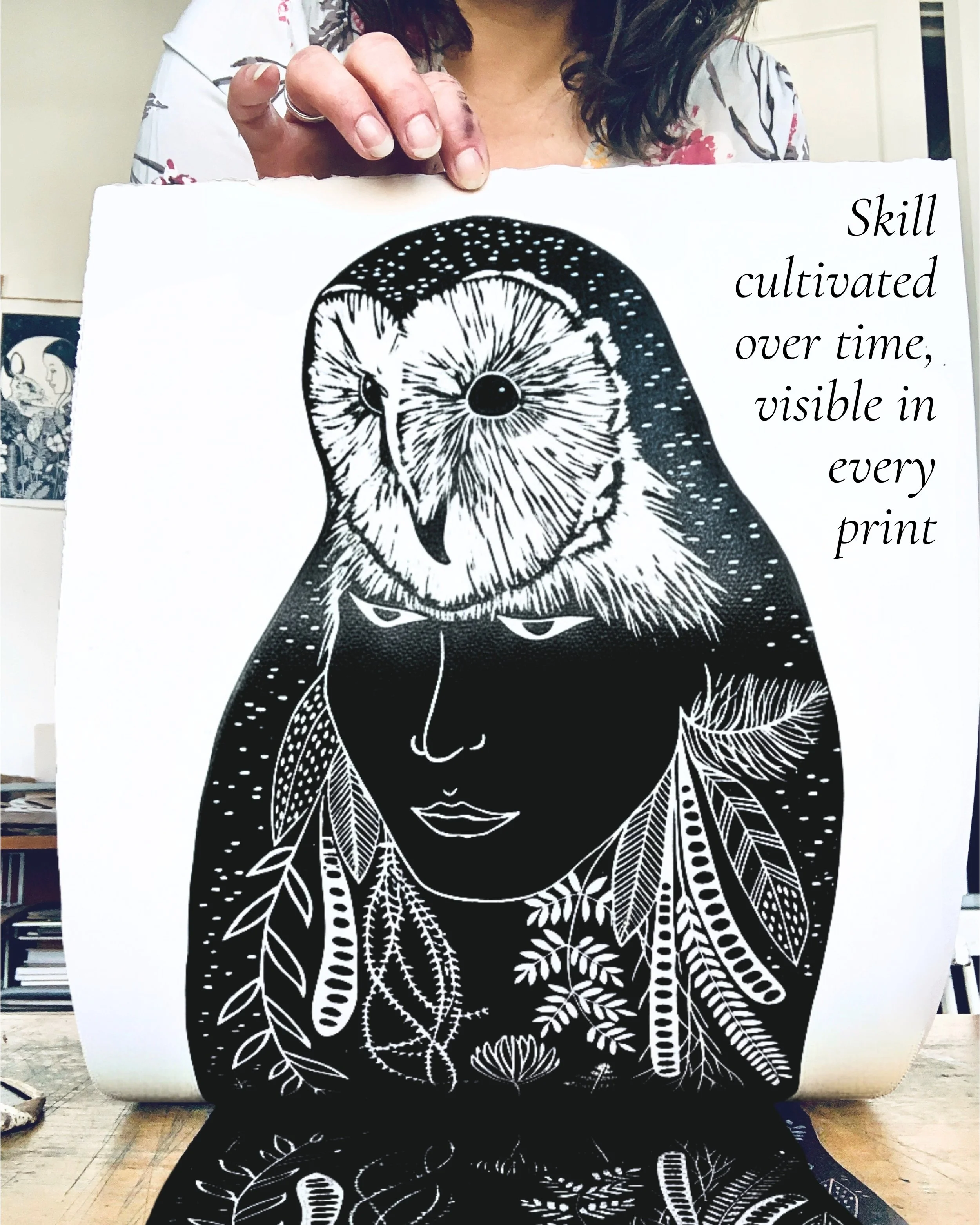
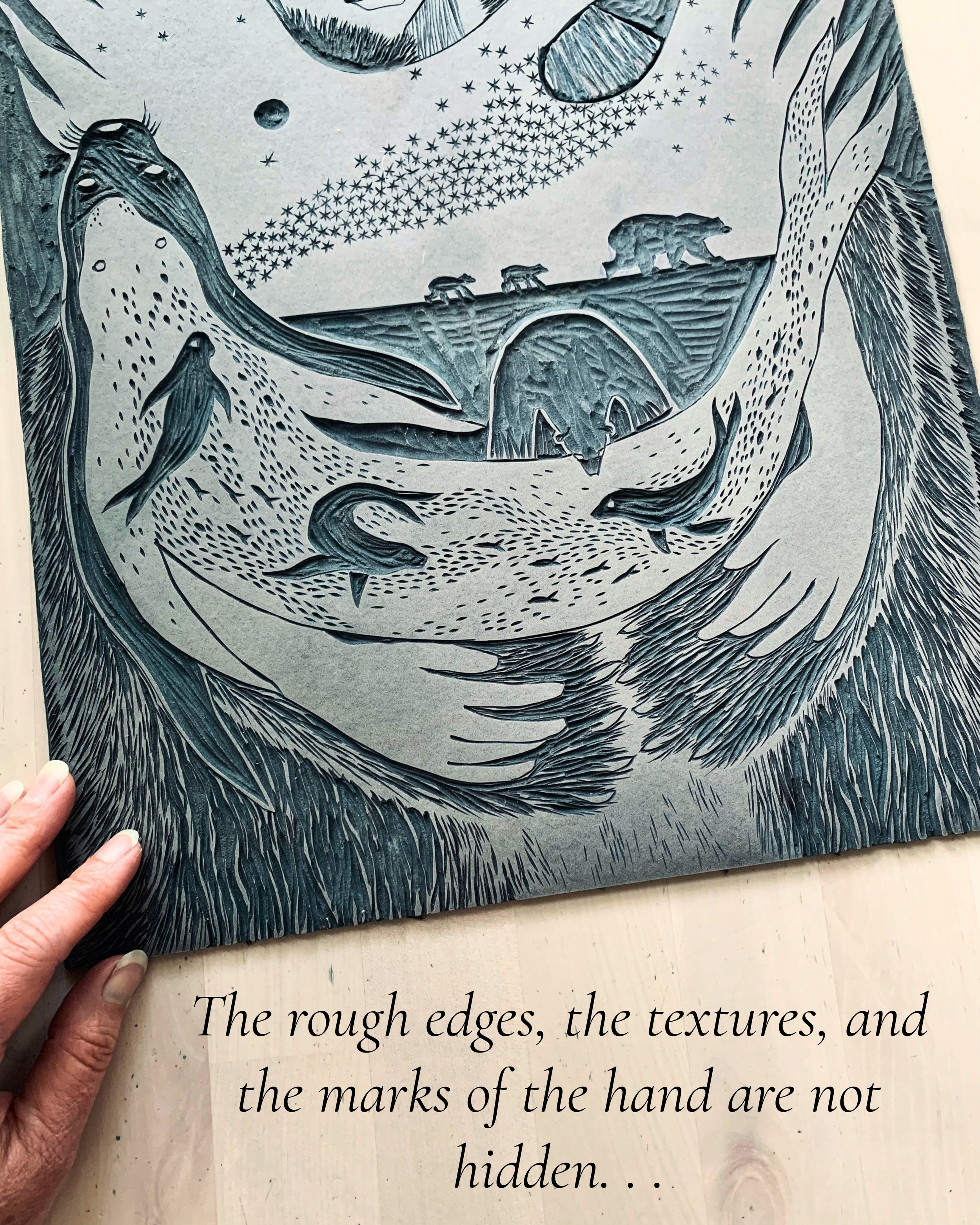


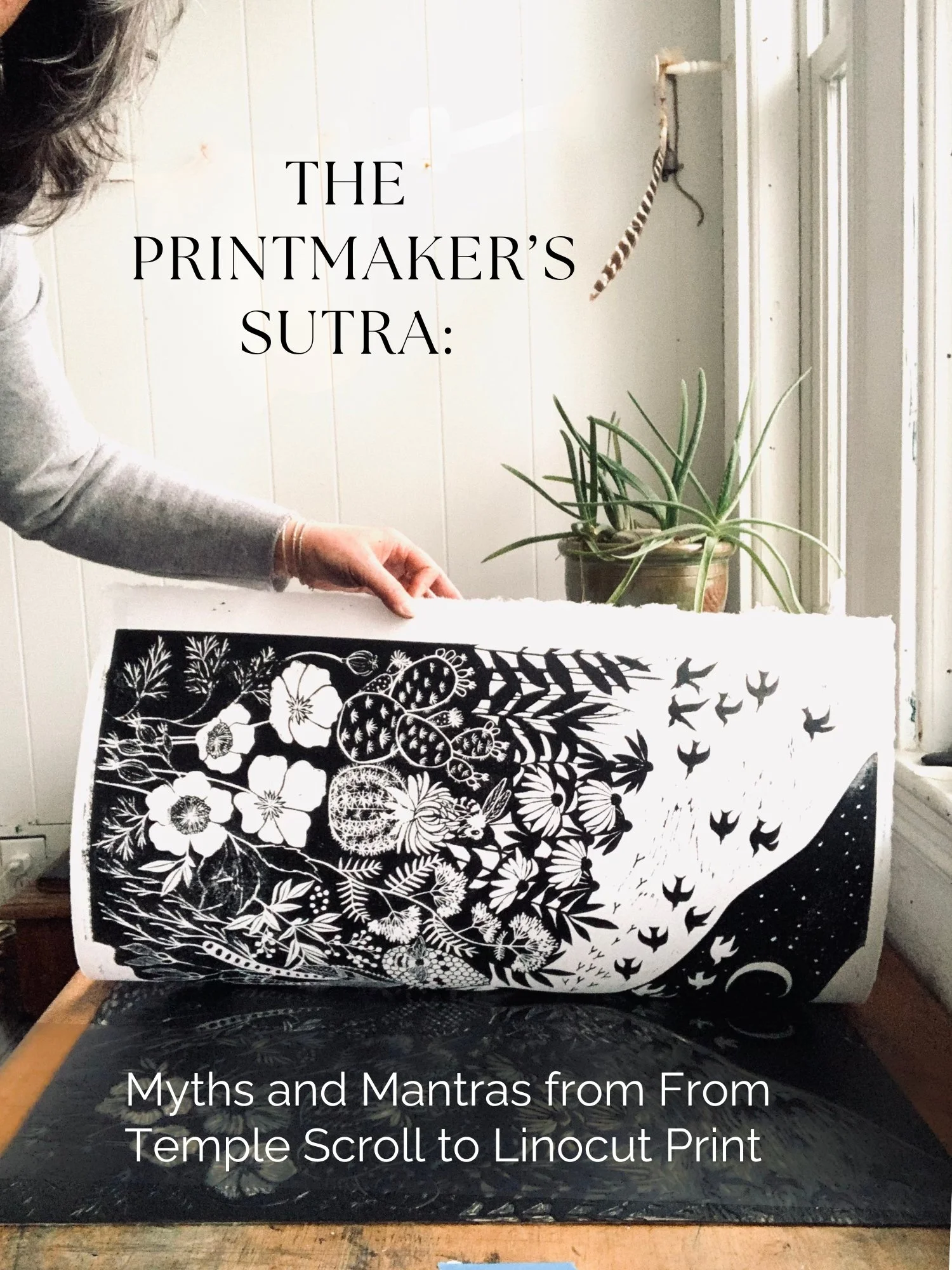

Across centuries, printmaking has evolved—tools shifting, surfaces reborn. At first glance, the move from wood to linoleum might seem a modern rupture, yet another story whispers through the fibers. Though one is an ancient elder growing upright towards the sun, the other a younger kin forged from what has fallen - scattered remnants of cork dust, wood flour, linseed oil, woven jute - they share a subtle kinship. What follows is a reflective exploration of how, beneath these differences, often cast as opposed or in tension, wood and linoleum echo the same material intelligence. They are related forms within a longer material lineage, binding tree to fiber, past to present, hand to spirit.