
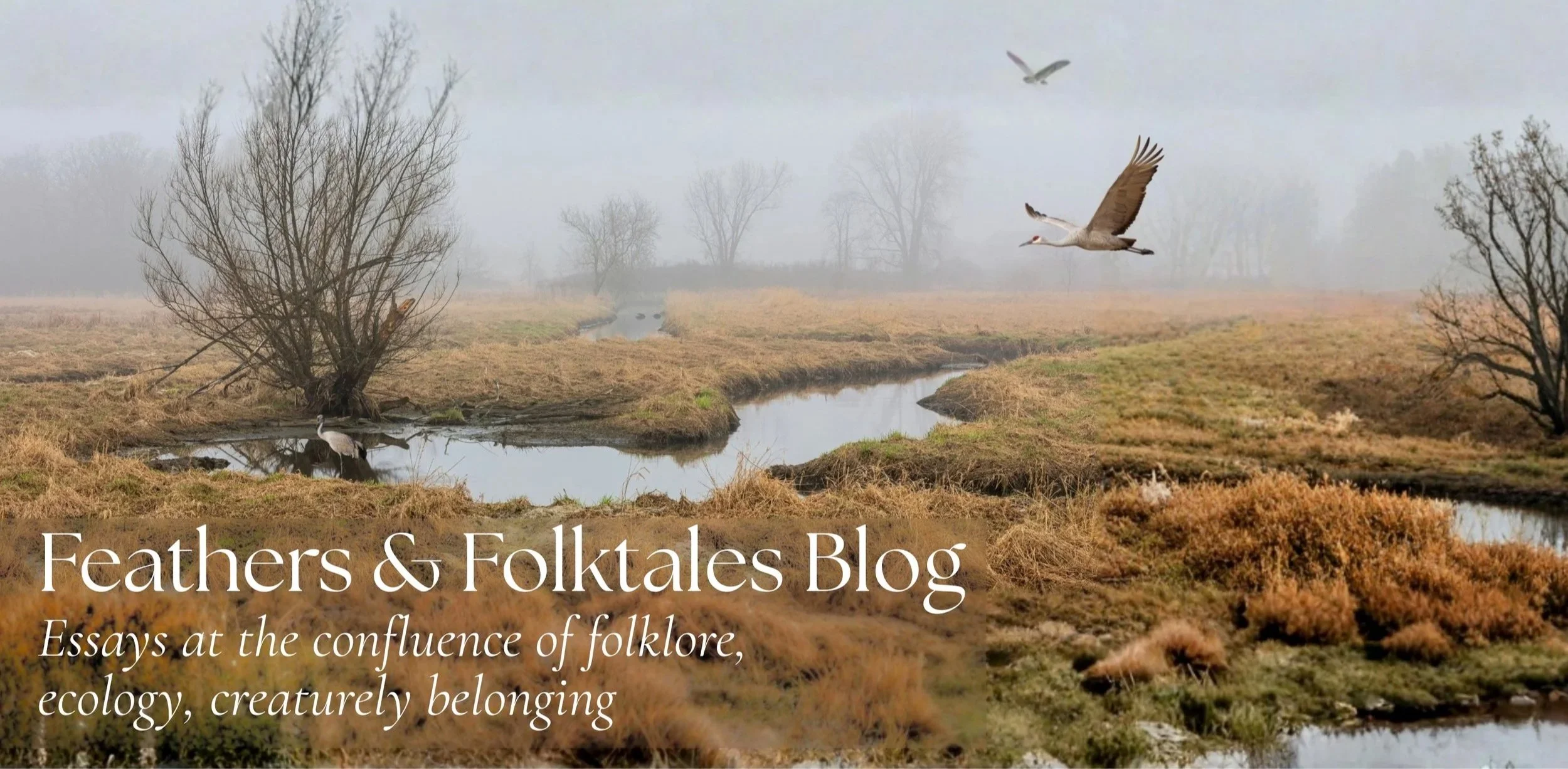

This winter near my home
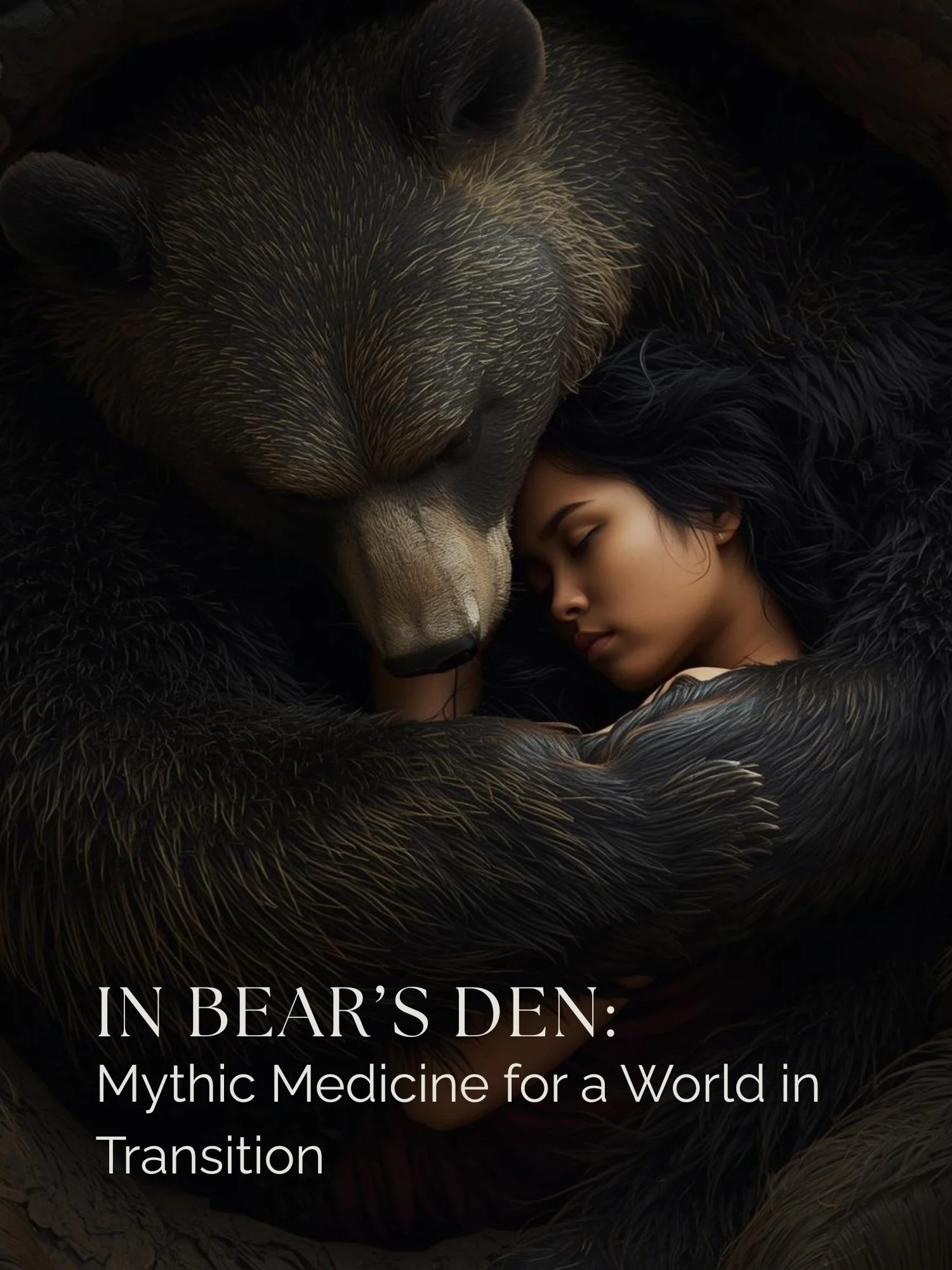
It is that wintery time of year again here in Massachusetts, when one might feel a pull toward pelts, skins, furs, and feathered cloaks, with their promise of comfort and warmth. Initially, we may regard this woodland wear as a form of physical protection. Yet in the language of folktales and fairytales, the adornment of creaturely garments serves another meaning and purpose entirely. Time and time again, we find these wildwoven cloaks used to conceal a heroine during her tender moments of inner transformation. They are psychic wombs—threshold skins through which the heroine separates, gestates, and is reborn into a new self of her own making. Whether it is Mossy Coat wrapped in a living cape of moss, or Allerleirauh who wears a coat of many furs, or Kråksnäckan, the Swedish-Finnish folk heroine who dons a cloak of raven feathers, enclosed within a cloak assembled from the forest’s own body, the creaturely heroine enters a cocoon-like time of incubation, stepping away from human society and into the wild, earthly sphere. There, embraced by the untamed, she is free to unfold in her own time toward who she is becoming.
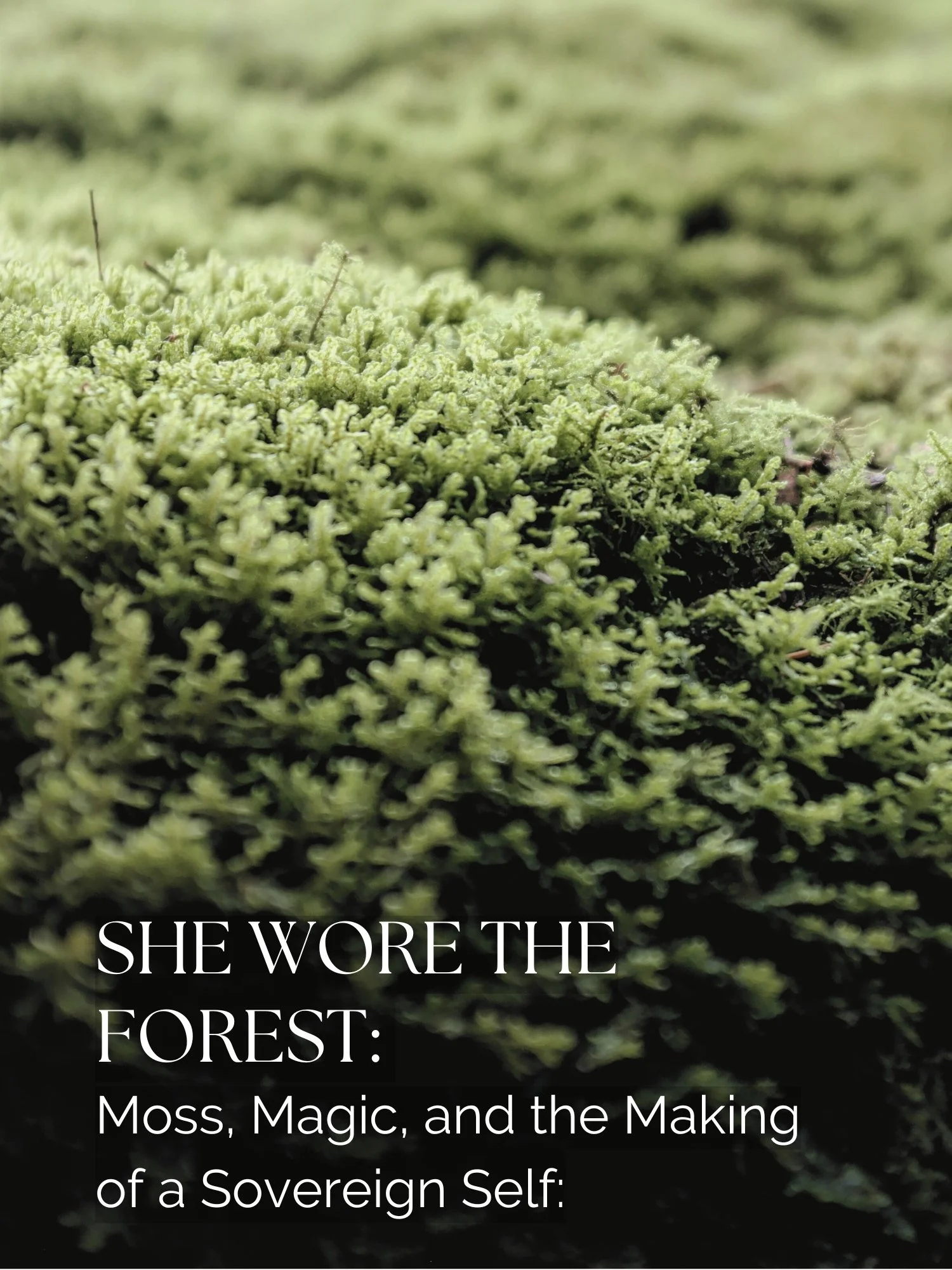
A blog post about Mossy Coat
Part 1: The Cloak and Cradle of Becoming
A coat of living moss lies at the heart of an old English tale called “Mossy Coat” retold by beloved writer Angela Carter in her Old Wives’ Fairytale Book. Fashioned from wild mosses by a resourceful forager-mother, it becomes the means by which her daughter can disguise herself to evade an unwanted and harmful suitor, and achieve a sense of freedom and sovereignty over her own destiny. She finds work in the kitchen of a royal castle where she is demeaningly named “Mossy Coat”. Yet the living garment does not merely hang upon her shoulders. It breathes its quiet magic around her, sheltering her, strengthening her, its quiet vegetal magic moving alongside her will. Together, girl and moss shift the story’s current, finding a way into the prince’s heart, transforming the conditions of her fate.
In this folktale the vibrant green moss does more than clothe the heroine—it veils her, shelters her, and guides her, opening a path to freedom, self-determination, and unforeseen possibility. Too often, we can get caught in the drama of the story, and forget about the coat itself, and the powerful pivotal role its own wild animacy and vitality plays in the heroine’s unfolding. In Gathering Moss, botanist Robin Wall Kimmerer uncovers the secret lives of mosses—tiny green worlds that cradle hidden life and quietly sustain the forest ecosystems around them, often unnoticed by human eyes. Though small and humble, mosses stabilize the soil, retain water, and nurture hidden life, offering shelter and sustenance in their silent, patient way. In the story, the heroine’s coat of moss carries the same quiet power: a living cloak that wraps her in resilience, patience, and gentle strength, allowing her to move beyond her lowly station, to shape her own path, and to grow in ways the world might never have expected. Here in this story the heroine’s relationship with her mossy coat reveals a kinder more intimate relationship to nature: one of trust, embrace, and inhabitation. Nature is not a tool to wield, but a but a quiet, tender companion, stirring what sleeps within, coaxing it to bloom, and whispering to the wearer of her hidden worth and the power she carries to shape her own story.
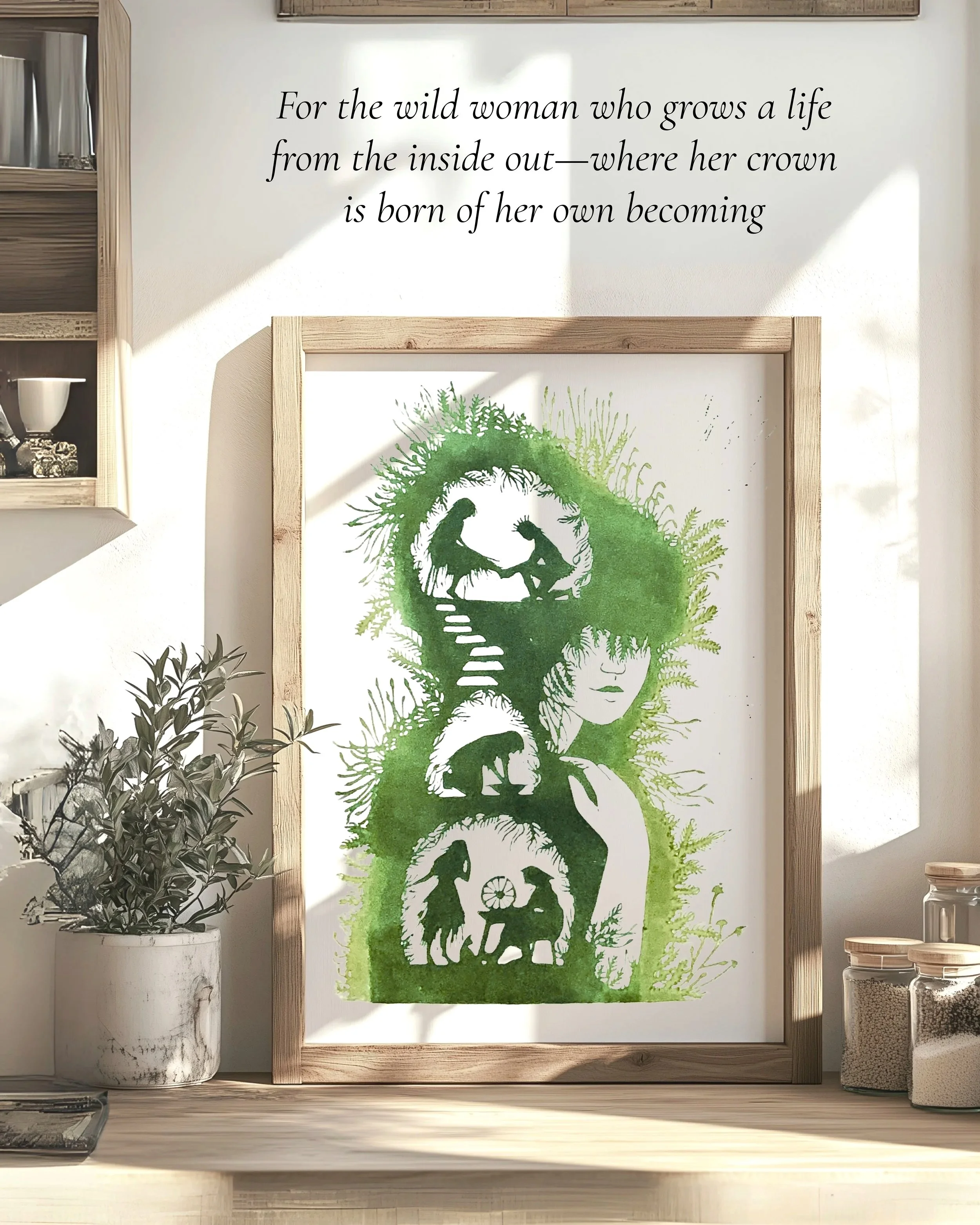
Within the living coat of moss, the heroine becomes untethered from the fate of her former life and steps into her own power. Like the Selkie’s sealskin pelt, the mossy coat preserves the heroine’s vitality, guards her agency, and holds her connection to home and self. These “second skins” serve as guardians, protectors, in worlds that would bend women toward marriage rather than honor their full being.
A living cloak of rabbit pelts echoes the transformative power of Mossy Coat in a kindred Appalachian tale, “The Princess That Wore a Rabbit-skin Dress” collected by folklorist Marie Campbell in Tales from the Cloud Walking Country from an informant named “Uncle” Tom Dixon in Kentucky. In this story, a coat made of rabbit fur shields the heroine from an unwanted marriage to her own father, allowing her to escape from a parental predator. Like Mossy Coat, she inhabits the threshold between invisibility and radiance, slipping in and out of her magical dresses with perfect timing, using the space between worlds to secure both safety and the prince’s attention and affection. Here we see the rabbit-skin cloak’s true magic and gift: it breathes into her the elusiveness, shadowed cleverness, and quiet cunning of wild rabbits—threshold creatures of twilight hours, moving unseen yet by an instinct that senses when to hide and when to act. More than a disguise, the cloak becomes a second skin, a vessel of identity that cradles, protects and grants her the freedom to make deliberate, empowered choices in the hidden warrens of her destiny.

Allerleirauh by Arthur Rackham (1867-1939) renowned English book illustrator and leading figure in the “Golden Age” of British illustration. Photo from Wikimedia Commons
Allerleirauh, the Germanic version of this tale, is a similar story about a coat of many furs, and the Swedish and Finnish tale of Kråksnäckan (“Crow-nose”) is an echo too except it involves a cloak of raven feathers. Even in South Asian Hindu lore, we find a folktale about a serpent/cobra maiden, or Ichchadhari Naagin, who lives in the human world but keeps her serpentine skin secret like a living cloak of identity, power, and wild wisdom: vulnerable when it is hidden or stolen, sovereign only when she reclaims it.
Most striking is how, across these tales, wrapped inside this cloak woven from the wild, a heroine moves from disempowerment to agency, from an inauthentic life to a more truthful one. More compelling still is the living wilderness stitched into the garment, the quiet but potent breath of the untamed that grants it its magic and its power to change she who is cradled within it. Dr. Clarissa Pinkola Estés in her book Women Who Run With the Wolves, refers to this deepening of a woman’s intimacy with her inner wildness as the “instinctual self” - the deep, untamed core that remains tethered to our innate wisdom. We see how in each tale the heroine takes on the spirit of the creature she is cradled within, inheriting its instincts, cunning, and courage—shaping her choices, sharpening her inner knowing, and carrying her toward a destiny she claims for herself. The animal cloak becomes so much more than a garment: it listens beneath the noise of expectation and safekeeps the qualities of feminine identity that society shuns. Wrapped inside this wild woven cloak, the heroine can access her anger, her sovereignty, her predatory clarity, and her wild intuition. The cloak becomes the vessel through which these shadowed powers are reclaimed, a talisman marking the symbolic death of the compliant self and the emergence of a more authentic self she alone commands. And so, in this timeless storied way, the tales whisper to us: when the world cannot hold us, the wild still will.
Part 2 The Loss of the Cloak: Exile of the Self
It is only by honoring the wildness and instinctual self woven into the wearing of the cloak that we can fully comprehend the profound weight of its loss. This we witness time and time again in the many variations of the Swan Maiden fairytale that appear in landscapes around the world centering around the loss of a cloak of feathers. A man steals the Swan maiden’s feathered cloak, binding her to the human world, coercing her into a marriage not of her choosing. The grief of the cloak’s absence weighs on her like a tether, and only when she discovers it again can she freely return to her true home in the sky.

Swan Maidens by Walter Crane (1845–1915) was a British artist recognized as a key figure in the late 19th-century Arts and Crafts movement and the "Golden Age" of children's book illustration. Photo from Wikimedia Commons.
This Swan Maiden appears across many cultures with subtle variations. In Scandinavia it appears in the Poetic Edda, a medieval Icelandic collection of Old Norse pre-Christian mythic poems, where the svanmeyjar — swan maidens — descend to earth and their feather cloaks are claimed by mortal men to coerce them into staying earth-bound. When the swan maidens recover their wings, their departure feels like a decisive reclamation of sovereignty and a return to her own nature after a season of earthbound captivity. A kindred tale appears in the Germanic tradition, recorded by the Brothers Grimm in Kinder- und Hausmärchen as “Die drei Federn” (“The Three Feathers”). Here, the story focuses on a single swan maiden and a lone man, and the drama unfolds with the familiar rhythm: the maiden’s cloak is hidden, she remains with the mortal world, and ultimately, when she reclaims her feathered garment, she takes flight once more.
It is this very cloak — the feathers themselves — that carries the deeper resonance of these stories. Feathers are one of the defining features of a bird and the living framework of a wing that lifts and guides toward the sky, as well as the careful lining of a nest. But when feathers are stolen and wings are clipped, there is a sense of arrested growth—a stunting of potential, a tragic absence of what makes the self whole. The image of a clipped wing or stolen feathered cloak becomes a symbol of the disowned Self, a tragic inhibition of full self expression, the part of the self kept from answering the call of one’s true nature. Feathers are also warm, cozy, protective and their absence and suggest a missing maternal presence. This tale carries the haunting ache of loss, of a maiden’s very self clipped and bound when her feathers are taken, of the heartwrenching tension between human attachment and the pull of her own nature, and the bittersweet triumph of freedom regained after such loss.
This same story appears across cultures, but in subtly different variations. In the Chinese legend of The Cowherd and the Celestial Weaver (Niú Láng Zhī Nǚ), the weaver maiden’s heavenly robe binds her not only to the sky but to duty itself. When the mortal cowherd discovers and conceals her garment, she remains with him in a marriage that is tender and mutual, so her eventual return to the heavens (demanded by the heavenly Queen) is not framed as freedom but as a tragic parting — the restoration of cosmic order at the cost of earthly love. Their separation is a devotion stretched across the Milky Way, an enduring sorrow that allows reunion only once a year, when a bridge of magpies arcs across the heavens to carry them together, if only briefly.
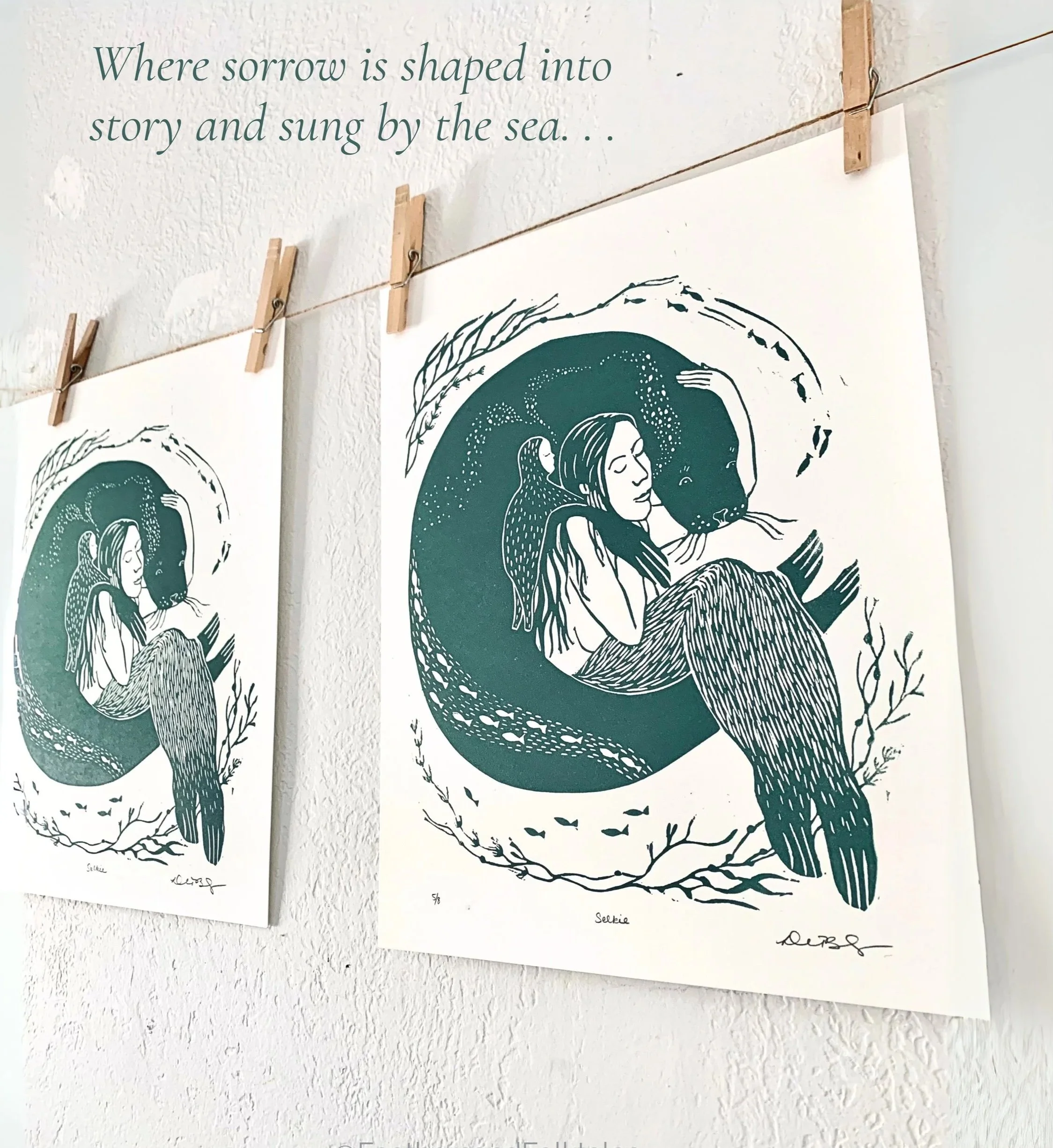
Though at first it may seem that reclaiming her celestial robe and returning to the heavens is a loss to the relationship, the story quietly reveals its deeper power: the garment tethers her to her destiny, her purpose, her dharma, even as it separates her from the mortal love she has known. The tale whispers of the paradox at the heart of becoming — that to find the self, to step fully into one’s own element, sometimes comes at a great cost. The tale tells in its own timeless storied way a lived human truth that is often too painful for us to name: the ache that sits between the pull of love and the call of vocation. That true wholeness often demands sacrifice and a letting go that is itself the passage to maturity, sovereignty and the discovery of who we are meant to be.
The Vietnamese Swan Maiden tale of Nàng Tiên safeguards this same truth, and carries this tension in a subtly different key. A fairy woman, whose feathered cloak embodies her very being, is bound to the human world when a woodcutter hides it, and she lives with him, dutifully fulfilling the roles of wife and mother. Yet the spirit of the feathered cloak hidden from her, still whispers to her, and keeps her longing for her true home in the skies. When she finally recovers it, she ascends to the heavens, leaving behind a token for her child — a tangible trace of her presence and care. In this telling, the departure is intimate and bittersweet: the fairy woman rises, not in triumph, but in the quiet ache of necessity, her heart stretched between the pull of maternal attachment and the call of her true nature. The story whispers to us that the path to the self is rarely without loss, that sovereignty is inseparable from sacrifice, and that the deepest truths of identity emerge in the tension of belonging to more than one world.
Across these tellings, the maiden’s feathers or heavenly robe are inseparable from her being. Yet the true initiatory moment lies not in the cloak’s loss, but in having to face the pull of both worlds once she retrieves it: the choice she must make to stay or to rise, to cling or to let go. It is in the act of facing this impossible tension, in measuring the cost of attachment against the call of the self, that the heroine comes into her own. To reclaim one’s power, to step fully into sovereignty, comes at great cost, and it is precisely the courage to answer one’s own call — that the depth and value of the self are revealed.
A blog post
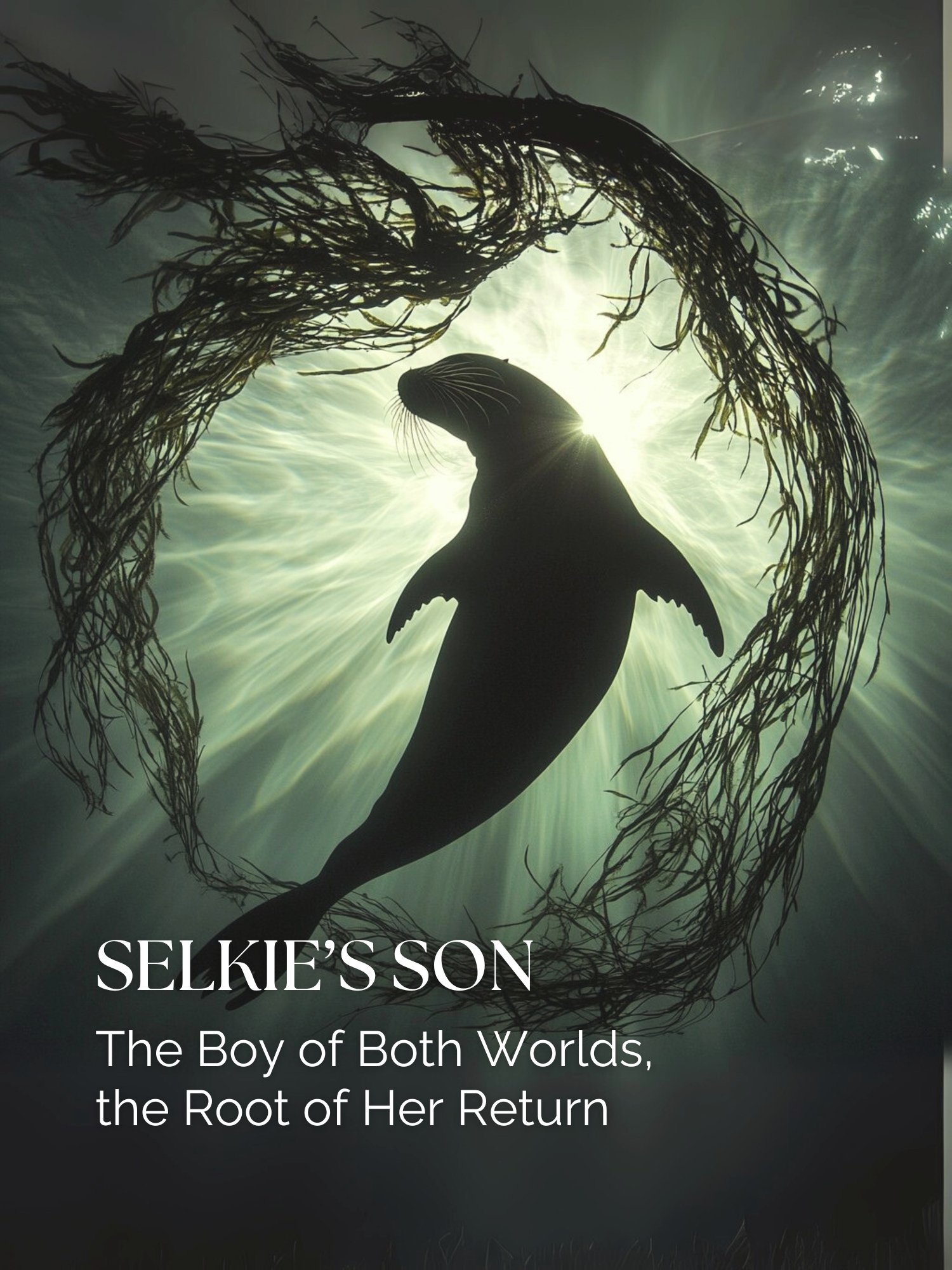
It becomes so clear how these Swan Maiden stories echoe that of the Selkie, from Ireland, Scottland and Faroe Island folklore. Selkie’s sealskin pelt is stolen to coerce her into a marriage, and its absence is more than a missing garment—it is the loss of her very own skin. When her son discovers the pelt and she slips back into its familiar contours, it folds around her like a returning heartbeat, animating her body, restoring the pulse of her instincts, and reclaiming the courage and agency that had been stilled. In that moment, the pelt is more than a garment: it is the reclamation of soul itself, the deep, wild core returning to its home.
In the living pulse of these stories, we discover how the cloak is not decorative, it is not worn for external validation, it is the heroine’s creaturely instinctual self, the embodiment of her deepest spirit. Without it, she loses her inner compass; she is severed from the skies, the oceans, the elemental home she breathes in, and cannot move into the fullness of her being. More profoundly, in these tales of loss, the cloak offers no comfort in the sense that one might think a cloak might offer. Its power is not soft or consoling; it tethers her to the raw pulse of her own soul, it demands her allegiance to the instinctual inner voice, the self she was born to be, and to the wider cosmos that calls her name. It exacts a price that can cut to the heart — the loss of love, of attachment, of what is dearly held. And yet it is in this tension, in the quiet ache of separation, in the trembling courage to answer her own call, that she discovers her true purpose in a cosmos that patiently holds the promise of sovereignty that only she can claim.
Part 3 The Making of the Cloak: Return to Wholeness
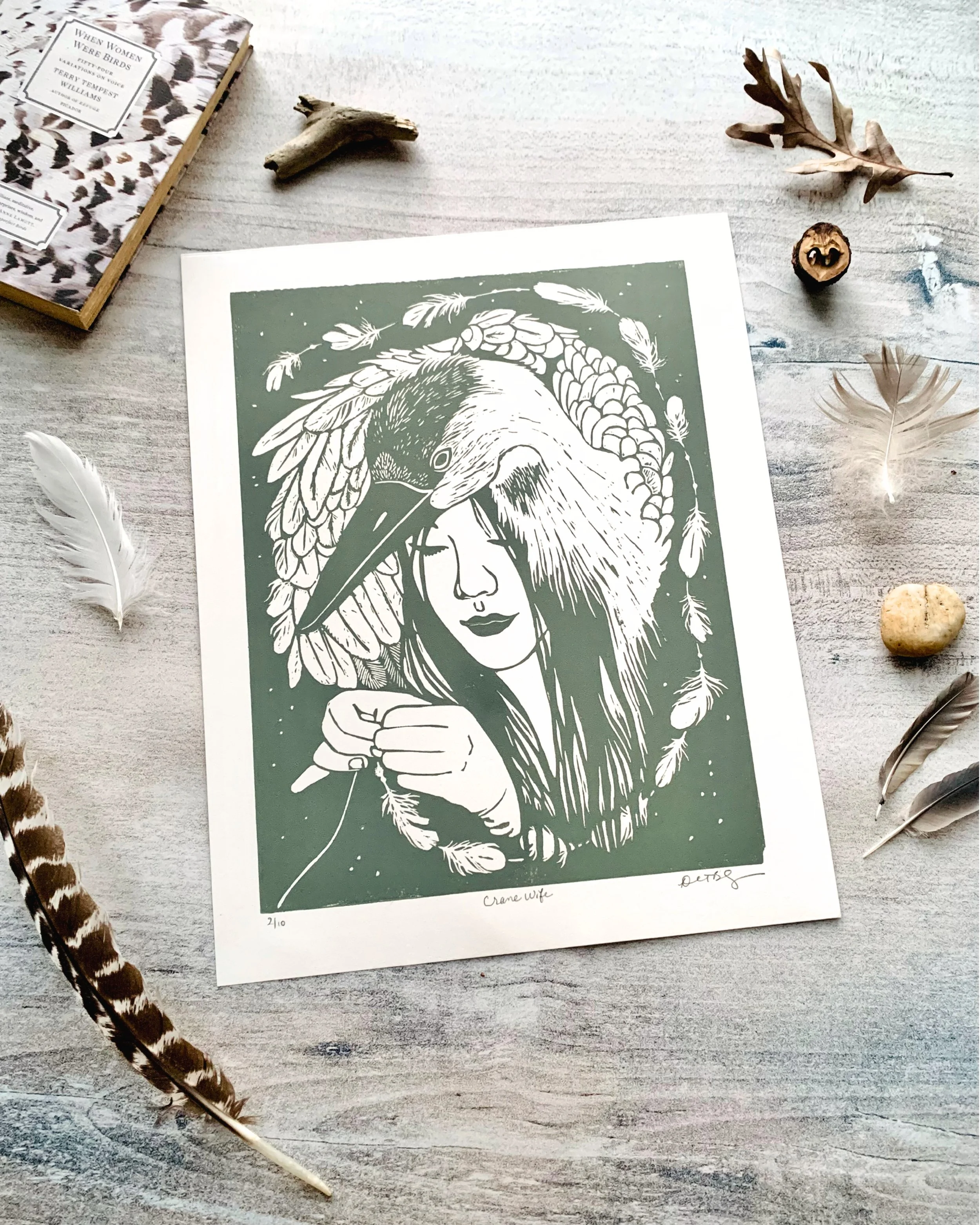
A handcrafted linocut inspired by the folktale of the Crane Wife
There are some fairytales and folktales that revolve around the stitching together of the creaturely garment itself. Tsuru no Ongaeshi (“The Grateful Crane”) or more popularly known as The Crane Wife is a Japanese tale about a wounded crane who is healed by a man and to repay him she appears at his door disguised as a woman and a skilled weaver. She agrees to marry him under one condition: he must never watch her weave in private. When curiosity overtakes him, he peeks behind the door and is horrified to recognize she is the wounded crane, creaturely, plucking her own feathers from her wings to make the fabric. In this moment of being watched, she realizes the promise between them has been broken and she flies away.
In this tale that centers around the weaving of the feathered fabric, the labor itself becomes the crucible of change, and the garment grows into a living emblem of the self the heroine is learning to claim. Here the weaving of the feathered cloth becomes a mirror of the soul’s own becoming, but as with the cloaks in the tales discussed earlier, this sacred labor demands a protected, solitary space. In this particular story we see more clearly how identity is never assembled in public view; it is woven slowly, strand by strand, in the hidden chambers of the psyche, away from watchful eyes. Perhaps this is why psychotherapy, like other deep inner work, happens behind closed doors—it is sacred labor, the quiet tending of what is not yet formed. Like pregnancy, it requires enclosure, patience, and protection. Seen too soon, judged too early, or exposed to unwanted public scrutiny, the fragile process falters; the spell breaks.
The Crane Wife begins as a tale of the heroine’s self-sacrifice and diminished self-worth: she feels indebted, relinquishes her feathers, and with them her capacity for flight, choosing to remain in the human realm to repay the man who “healed” her. But as she plucks her own feathers to fashion a new garment, she faces her old wounds, sheds illusions and defenses, and stitches a truer skin. Such work is tender, vulnerable, and relational. The feathers themselves evoke a mother bird’s presence and care, and the new fabric holds her — and, in a quiet way, holds us — even as we unravel inside. Transformation often requires this kind of intimate companionship, a nest, a cradle — a presence that is private and intimate that tends, witnesses, and guides us into becoming. When the promise is broken, when her husband intrudes upon her work, it marks her moment of clarity: she has done the work, she sees what the marriage has cost her, the spell is broken. She steps into the world no longer tethered to a diminished self, unbound, and fully, unapologetically herself.
Just as the Crane Wife discovers that transformation emerges through the labor of making a garment, so too do other tales show that the act of stitching, weaving, and shaping can become the crucible of change. In the Germanic fairytale The Six Swans, collected by the Brothers Grimm, this truth is embodied in shirts lovingly woven from wild nettles. The tale opens with a Queen’s death, and in its wake, the widowed King’s six sons are bewitched into swans by their stepmother, leaving their sister to bear the burden of their rescue. To break the spell, she must sew six shirts from wild nettles—an arduous task that requires patience, skill, and endurance over many years. The garments themselves hold a potent magic, not only restoring her brothers from swans to human form, but weaving them back into the family they had been severed from. Here the sister is tasked with labor of stitching together the exiled, fractured parts of her family back into wholeness. Like the Crane Wife, there is a condition: the sister must remain silent, and never speak a word until the work is complete. Silence in this Six Swans story becomes like the Crane Wife’s private room, like a garment that conceals, a metaphor for inner work, draping the soul in protective folds where she can do the labor required to save her family and save herself. This quiet becomes a cocoon in which transformation can quietly take root.
Like the Crane Wife, who painstakingly plucks her own feathers to fashion her garment, in The Six Swans the sister’s labor of sewing six shirts from wild nettles is similarly entwined with pain, patience, and love. Nettles themselves sting on contact, their leaves bristling with defense, yet they thrive in disturbed, inhospitable soils, a living emblem of resilience and survival. Though sharp at first, these same plants can be transformed into food, tea, or medicine—symbols of nourishment born from hardship. In stitching the prickly nettles into shirts, the sister is in a way facing and tending to her own wounds, working through them and the quiet grief and pain alchemizes the garments into instruments of protection, restoration, and healing. Her patient, enduring labor mirrors the tenacity and medicinal qualities of the plant itself.
Across both tales, we see that the heroine’s becoming is born of painstaking, labor that goes unseen, a poignant symbol of quiet resilience. Whether plucking feathers or threading nettles, the heroine works to weave the fragments of self, to disentangle wounds, and to stitch together a renewed, whole self. Like a garment that offers no comfort in the conventional sense yet silently whispers and pulls at the soul, the stitching of this fabric is both painful and arduous. And yet it is precisely this interior labor—performed in a private room, or in silence - that allows the heroine to reclaim herself, to weave the fragments of her being into a whole, sovereign self. The fruits of this labor are invisible until their time comes, gestating unseen like life in the womb, incubating strength, sovereignty, and transformation until the moment of emergence. In these quiet, tender acts, hardship is transmuted into resilience, pain into protection, and labor into the subtle alchemy of becoming fully oneself.
Part 4 The Mother Woven Within
We begin to see how in many of these stories a garment stitched from elements of natural world becomes the heroine’s new source of attachment as she uses it to separate from a previous status - whether it is freeing herself from a wounded relationship, or growing out of a more innocent or naive or disempowered sense of self, or transforming from victimhood to a more empowered sense of self. By protecting, nurturing and cradling her soul when her closest human kin cannot, the cloak becomes a surrogate mother holding her as she journeys through the perilous crossing from wounded daughter to sovereign woman.
In Mossy Coat, the heroine’s literal mother stitches her a cloak of moss which the heroine wraps herself inside as she journeys into the world alone away from her mother. In The Princess That Wore a Rabbit-skin Dress and Allerleirauh, the rabbit-skin cloak and coat-of-many-furs protects the heroine from the predatory forces within her family of origin offering her relief from her toxic harmful home environment. Within the shelter of the cloak, Mother Nature becomes the mother the heroine was denied cradling, concealing, and guiding her. Inside the embrace of the cloak the heroine is no longer a wounded victim, but a woman in transition: protected, tended, and slowly gathering the strength to step into the world as an active agent in her own destiny.
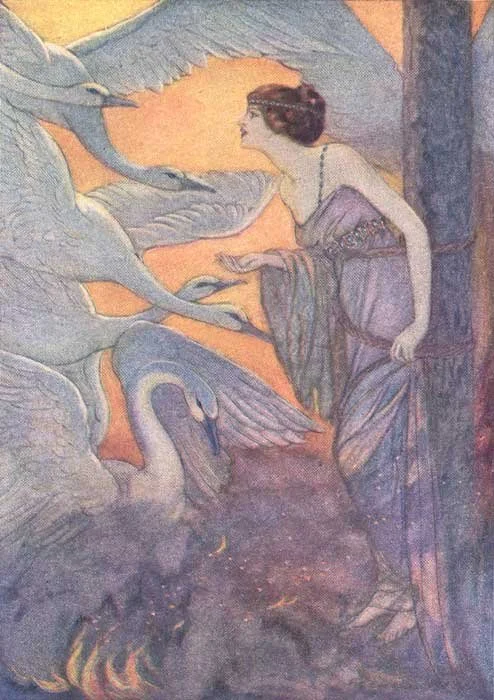
Six Swans by illustrator Elenore Abbott (1920). Photo from Wikimedia Commons.
In The Six Swans, seven children are left motherless, and the sister—the heroine—takes up the arduous task of stitching garments to release her brothers from their exile as swans. Her sewing becomes more than a rescue; it is grief made visible, sorrow worked through her hands. With each nettle shirt, she labors not only to restore their human forms, but to gather what was torn apart by loss, drawing her family back from fragmentation into belonging. Her silence becomes its own kind of cloak—a womb-like, incubatory chamber that is private, patient, and sacred—where the slow, unseen work of remothering can unfold. Like a pregnancy carried to term, the spell breaks only when the labor is complete, and what was formed in darkness presses into the light. The brothers are restored, and so is she: no longer merely a grieving daughter, but a woman who has carried her broken world within her, stitched it through suffering, and delivered it into wholeness.
Similarly, in The Crane Wife, the heroine labors alone remothering herself in a womb-like room, stitching together a new sense of self worth, untangling herself from the very wounds that made her self-sacrifice and feel indebted to the man who “saved” her. Though the story begins with her husband healing her, in the end, it is a story of how another cannot do the true work of healing for you, the heroine must endure the labor, midwife and birth herself healed and renewed into the world.
Mothers teach not only through comfort but also through challenge, and so too does the call of the creaturely cloak test the heroine, asking of her more courage, more strength, shaping her into the person is meant to become. When the Celestial Weaver must return to the sky, leaving her cowherd lover behind, or when the Selkie answers the call of the ocean, returning to her home in the sea and leaving her son, it is not punishment. It is an invitation—stretching each heroine’s fortitude, sharpening her courage, and calling forth an allegiance to her inner truth she had not yet known. The difficulty of letting go—of a lover, a child, or something precious—is just the experience needed to cultivate the qualities required that fulfill one’s destiny. True wholeness often asks for sacrifice; to become oneself rarely comes without loss. In this way, the trials guided by the whisper of the creaturely cloak act as a midwife to the self—patient, demanding, and wise—guiding through the contractions of hardship and the labor of loss. They stretch the heart, draw forth courage from deep within, and nurture the hidden life of strength and insight waiting to be born. Bitter as they may be, these trials are the midwives of the soul, tending to the quiet, painful work of transformation, bringing forth resilience, hard-won wisdom, and the luminous emergence of the self in its fullest, most enduring form.
. . .
These stories of wild furs, pelts, skins, and feathered cloaks remind us that the wild is not ornamental to initiation and transformation—it is essential to it. Across these tales, garments of moss, rabbit fur, feathers, and sealskin are never mere protection from weather; they are psychic vessels, living membranes through which the creaturely heroine shelters, gestates, and reclaims her becoming. Each cloak functions as a cradle for the instinctual self, holding what human kin could not hold, guarding what society would silence or tame. For this reason, the loss of a sealskin pelt or feathered cloak is akin to the loss of soul itself—the severing of the animating life-force that binds instinct to identity and grants the courage to live from one’s own center. Without it, the heroine is exiled from her vitality; with its return, she is restored to her depth, her agency, her rightful wildness. Reflecting on the meaning, significance and important role these creaturely garments play in these folktale and fairytale heroines’ lives raises a larger question: if these garments once bound instinct to identity, what have we substituted for it in an age that prizes productivity over vitality, visibility over depth, and performance over belonging—and what has that substitution cost our souls? Furthermore, in a time of ecological collapse, might the stolen sealskin, the buried feathered cloaks, symbolize our collective severance from the wild Mother Herself—and what would it take to reclaim that primal earthly attachment, that living connection, before it is too late?
And so we find ourselves at the threshold where these old stories meet the present tense. If we listen closely, we can hear whispers of wild fur, feather, and moss beckoning us through Deep Time, to find our pelt, find our creaturely garment, find our way back into belonging with the living earth.
References:
Campbell, Marie. “The Princess That Wore a Rabbit-Skin Dress.” Tales from the Cloud Walking Country, collected by Marie Campbell from informant Uncle Tom Dixon, University Press of Kentucky, 1971.
Carter, Angela. “Mossy Coat.” Old Wives’ Fairy Tales, Pantheon Books, 1979.
Estés, Clarissa Pinkola. Women Who Run with the Wolves: Myths and Stories of the Wild Woman Archetype. Ballantine Books, 1992.
Grimm, Jacob, and Wilhelm Grimm. Allerleirauh. In Grimm’s Fairy Tales, translated by Margaret Hunt, George Bell & Sons, 1892. Available online at Project Gutenberg, https://www.gutenberg.org/ebooks/5314.
Haase, Donald, editor. “Swan Maiden.” Encyclopedia of Folktales and Fairy Tales, Greenwood Press, 2007, pp. 998–1000.
Kimmerer, Robin Wall. Gathering Moss: A Natural and Cultural History of Mosses. Oregon State University Press, 2023.
Lang, Andrew, editor. The Yellow Fairy Book. Longmans, Green, and Co., 1894. (Includes The Six Swans.) Available online at Project Gutenberg, https://www.gutenberg.org/ebooks/19305.
Seki, Keigo. Folktales of Japan. Translated by Robert J. Adams, University of Chicago Press, 1963. (Includes Tsuru no Ongaeshi / The Grateful Crane.)
Vogel, Jean Philippe. Indian Serpent-Lore: Or, The Nāgas in Hindu Legend and Art. A. Probsthain, 1926. Available online via archive.org, https://archive.org/details/indianserpentlor00vogeuoft.
More blog posts


Note* In the Swedish-Finnish tale Kråksnäckan (“Crow-nose”), a heroine refuses the advances of a King, and to delay or avoid the marriage, she asks for three extravagant gowns: one made of bronze, one made of gold, and the things made of crow skins, feathers, and feet. The king fulfills her requests, and the heroine then takes the three gorgeous dresses and hides herself under the ugly crow cloak and flees the kingdom and finds work in the kitchen of a castle belonging to another kingdom in which lives a prince. One day, the queen and the prince attend a ball, and at the last minute Kråksnäckan takes off her crow cloak and wears the beautiful bronze dress. The prince sees her and is so enchanted that he gives her a ring. Later, at a second ball, she puts on the golden dress, impressing the prince once more, and receives another ring from him. Afterward, she prepares some pastries for the prince and cleverly hides the two rings inside them. When the prince discovers the rings in the pastries, he realizes that the mysterious lady at the balls must be the same servant he’s been mocking under her disguise. The prince summons Kråksnäckan, she reveals her true identity by removing the crow cloak, and he recognizes her as the beautiful woman he saw at the balls.
**A modern echo of this ancient symbol of the hare is in Richard Adams’ novel Watership Down, a story about rabbit resistance, survival, and self-determination.
This Jungian Life Podcast’s most recent episode “How to Stop Hiding After Trauma” offers a beautiful in-depth analysis of the Grimm fairytale Allerleirauh “Coat of Many Furs” which I mentioned in my reel. I highly recommend this podcast - check it out!
In the deep memory of our Earth, as the year turns, we witness the sun returning, brightened by the quiet tending of Earth’s creaturely beings. Across traditions, both ancient and living, these sun animals chase the sun, free it, temper its heat, and watch over it with attentive, nurturing care until dawn hatches. Within the spell of these stories, we begin to feel like we are living within a relational universe—awake, watchful, alive, and attuned. And with this sense of belonging, the stories can open a quiet space where the edges of a once indifferent world soften, and trust quietly unfurls, allowing wonder to rise as we follow the sun on its journey across the sky.