
Since the first dreaming of the world, there have always been stories in which the earth found a body, a voice, and a face through which to enter our world, dreaming herself into human form. Creaturely heroines are not merely figures who move through the landscape but an expression of the courtship of human imagination and the earth, the way the land births herself into being in the storied world, this marriage-place of worlds. She is the the earth’s emissary the face the wild puts on when she wishes to enter into our world, be seen and known. Before she is a woman, a swan, a seal, a serpent, or a bear, she is the dreaming of the ocean, shore, forest, desert itself—the earth gathering her own soul into creaturely form. The living landscape woven into a single body of feather, fur, flesh, and form of a woman walking, breathing, interacting in the human world and remembering herself in the old stories.
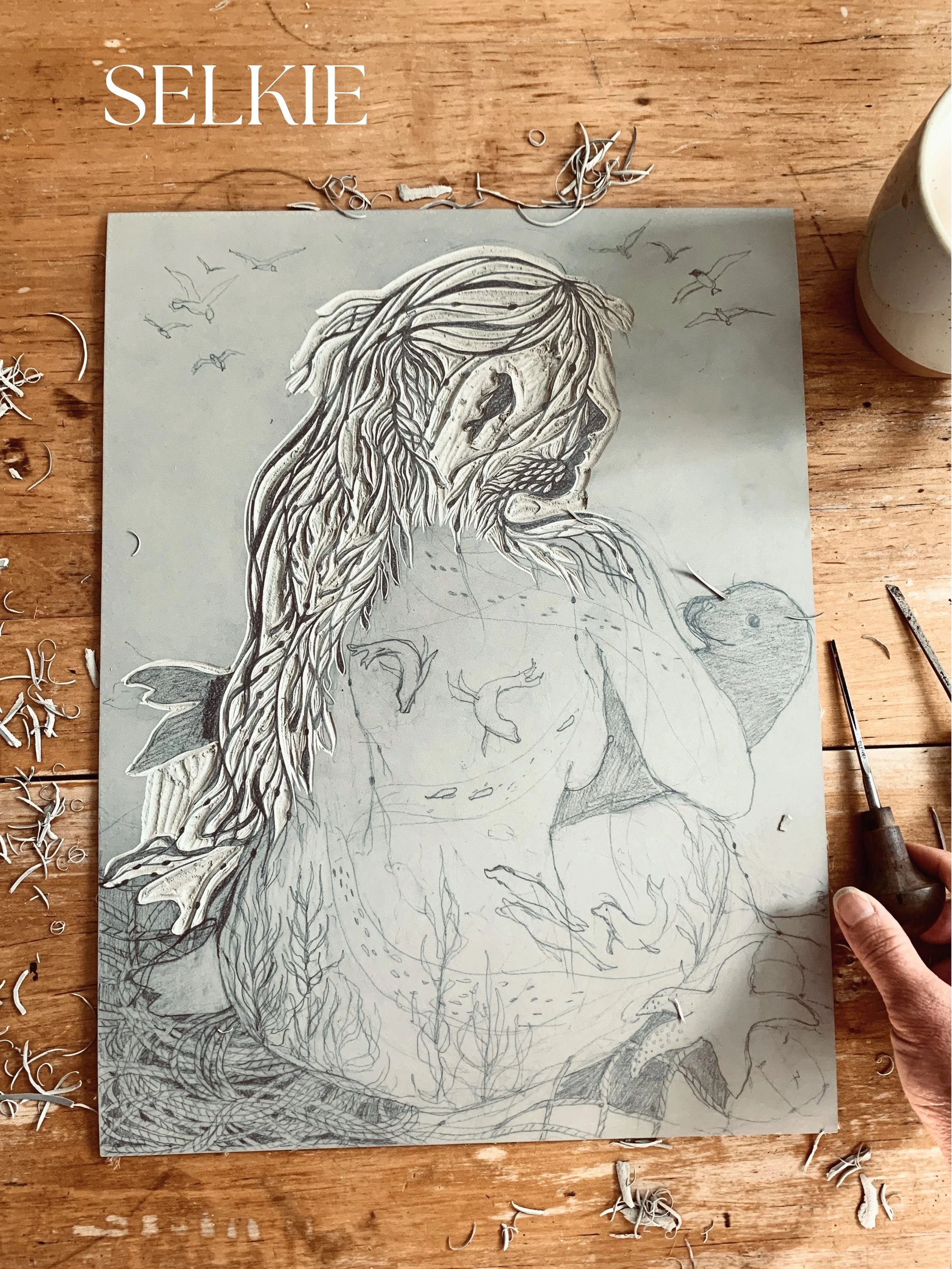
Through Selkie’s journey we learn how to love the way the earth loves, not by possession or loyalty to one, but a wild love, timeless and enduring that lives in fidelity to both sea and shore. Not the domestication of belonging which entraps and divides, but a deeper belonging wholly to each without surrendering the other.
In the storied realm, we follow these creaturely heroines into forests, through seasons, into comforting dens as well as shadowy places. Seeing the world through the eyes of the creaturely heroine, experiencing her joys and sorrows, is how we begin to inhabit, however briefly, the embodied experience of the living world. Whether we feel Selkie's longing for her sealskin, feel our own instinctual nature rise alongside Wolf Woman / La Loba as she gathers Wolf's bones within herself, or feel the weight of Crane Woman’s wounding and resolve as she transforms it into a woven garment of her own feathers, each story reveals the same truth: the creaturely heroine is not just a woman who is also a seal, wolf, or crane. She is how the earth invites us to see through her own eyes, drawing us into an emotional kinship felt before it is understood. The creaturely heroine carries the earth's own imagination, through this storied realm is how the earth’s experience and world view enters into human consciousness. To follow the creaturely heroine is to apprentice oneself to that intelligence.
Carl Jung taught us to listen to the dreaming of the collective unconscious, revealing that myths arise from patterns deeper than any one individual. David Abram reminds us that human imagination has never awakened apart from an animate world, but in continual conversation with forests, rivers, tides, and stone. Creaturely heroines seem to hold both possibilities together. Perhaps the oldest dreams have never belonged to humanity alone, but arise in the marriage-place between human imagination and the living earth, where the shore dreams Selkie, desert dreams Wolf Woman, tundra dreams Fox Woman, and the storied landscape becomes the place where human and landscape each learn to recognize each other.
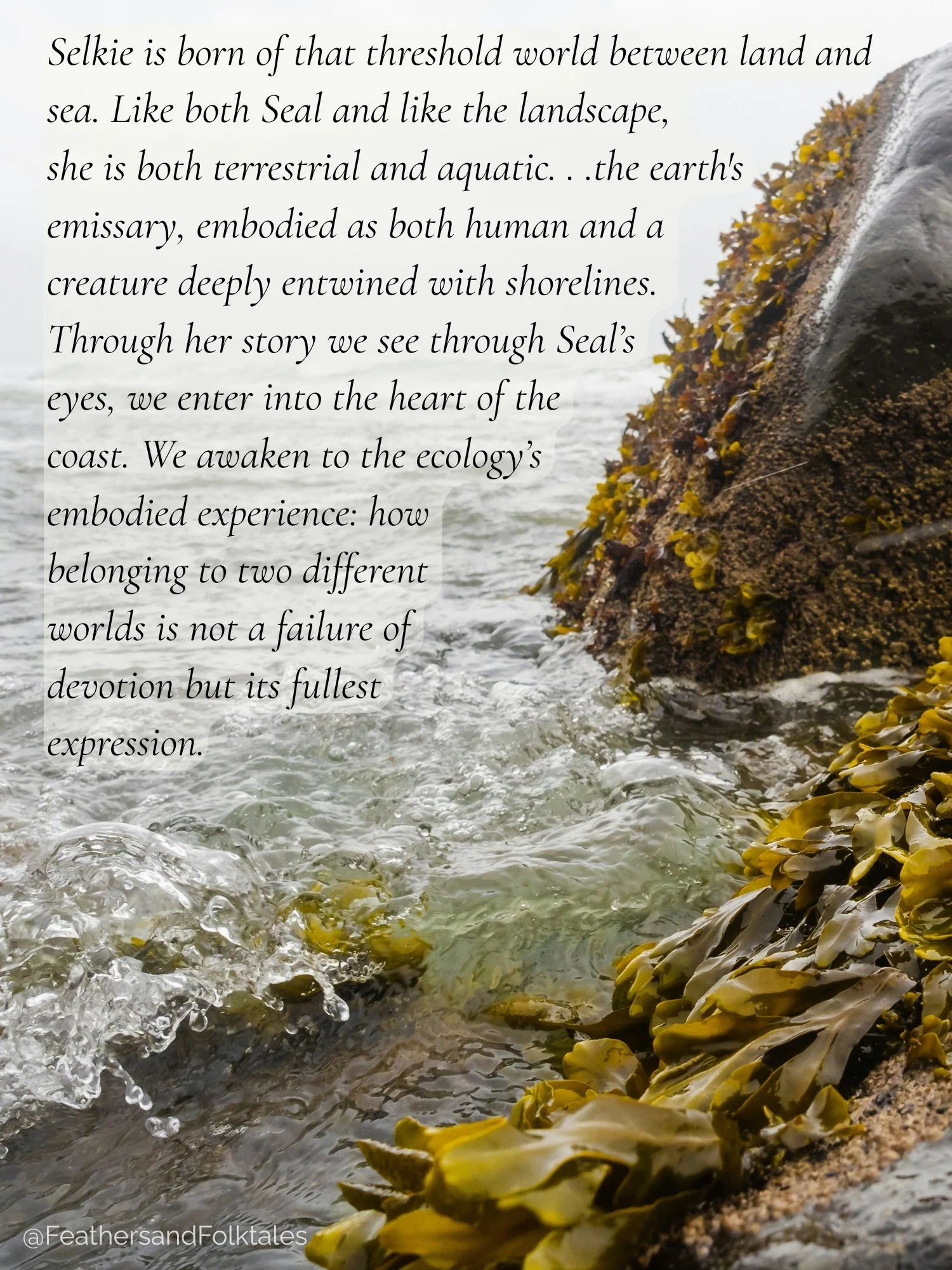
Photo Credit: Greg Rosenke on Unsplash
Along the ancient coasts of Ireland and Scotland, where land and sea have always spoken to one another, the Selkie's story rises and returns like the tide itself—a story of loss, longing, and homecoming. Stripped of her pelt, Selkie is trapped in a marriage to a human, binding her to the shore, severing her from her ocean home. When she reclaims her pelt, she is torn between the pull of the ocean where her soul belongs, the the child she loves, whose heart binds her to the shore. Through Selkie’s journey we learn how to love the way the earth loves, not by possession or loyalty to one, but a wild love, timeless and enduring that lives in fidelity to both sea and shore. The love this story awakens is not the domesticated love embodied by the Selkie’s husband, a love that seeks to possess and tame until it entraps and divides. It is a deeper, more enduring, wild sense of love that the Selkie’s heart reveals: a way of loving in which one can belong wholly to both worlds without surrendering either. Through Selkie’s journey we learn that loving and belonging to two different worlds is not a failure of devotion but its fullest expression.
It is no coincidence that this tale unfolds along the coast, that liminal threshold where land and sea meet in an ancient courtship. Tide pools, coastal marshes, and estuaries—where fresh and salt water become one—reveal that the richest forms of life emerge not from separation, but from relationship. Seals also embody this ancient belonging, entering the sea’s depths to feed and returning to the shore to birth young, children of both, carrying within their bodies and psyches the living relationship between them. The Selkie seems born of that threshold world too, she is a creature who is both human and aquatic, as though the coastal landscape had fashioned a living messenger through whom her forgotten way of knowing might become perceptible to us once more. She is the landscape’s emissary, bearing within her body and her story her world view. By rooting for a heroine who wears the body of a seal, we come to see the space between sea and shore not as a place of division, but as an authentic way of being that belongs wholly to both. The Selkie carries this older coastal knowing: she is not a woman who belongs to the sea; she is the sea expressing its own belonging through a woman’s form. Through Selkie, the wild translates herself into human story, so that an ancient knowing, older than language itself, may awaken once more within us. For a little while, the distance between human and the living landscape dissolves, she reveals herself as kin, becomes a relation rather than just a backdrop to our human drama, and we remember that we belong not above the living world, but within her, among pelt and kelp, tide and stone, salt and foam.
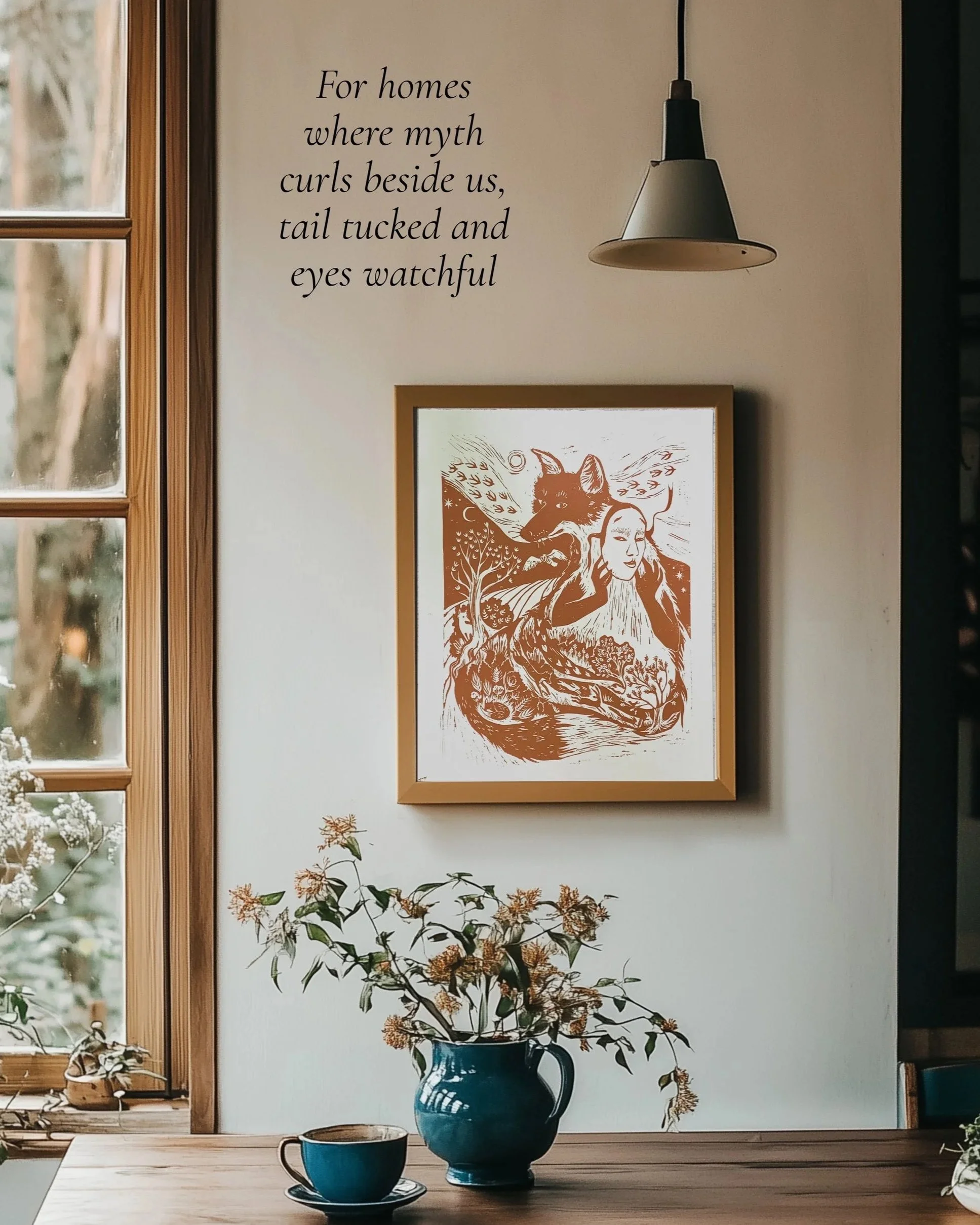
If the Selkie sings of our belonging to the wild through the language of the sea and shore, Fox Woman sings the same old song from the meadows, tundra and forest, curling her tail around our hearts until we remember that human and wild were never divided. Her paw prints wander across continents, taking root in the stories of Asia and beyond. She is known as Kumiho in Korea, Kitsune in Japan, Hồ Ly Tinh or Cáo Chín Đuôi (nine-tailed fox) in Vietnam, and Huli Jing in China. Though her names change with each landscape, her deeper work remains the same: wherever she appears, she loosens the borders between animal and human until each begins to remember itself in the other. Hayao Kawai, Japanese Jungian analyst and a leading interpreter of Japanese fairy tales, observed that Japanese fairy tales do not oppose humanity and nature as separate realms, but continually allow them to flow into one another through figures whose identities remain deliberately porous. He writes of the permeability between all things as expressed in the philosophy and cosmology of the Huayan school and its doctrine of yuanqi, as elaborated by the Chinese Huayan master Fazang (643–712) which influenced Japanese thought. Here, nothing in this world exists independently of others. Everything is dynamically mutually originating and depending for its phenomenal existence on everything else. Fox Woman belongs to this imaginal threshold. She does not merely represent the fox; she mediates a way of perceiving in which no creature stands apart from the world that dreamed it into being. Vietnamese Zen master Thích Nhất Hạnh gave a name to this ancient knowing too: interbeing—a truth Fox Woman has carried in her bones all along. When she takes human form, she does not become something other than herself; she simply reveals the relationship between all things that have always there. Human, animal, and landscape were never separate worlds, but living thresholds through which each shapes and dreams the other into being. She is the place where their dreaming meets, this marriage-place of worlds where fox remembers woman, where woman remembers fox, where the earth's wild imagination enters human flesh, and where humanity remembers itself as a creature of the earth.
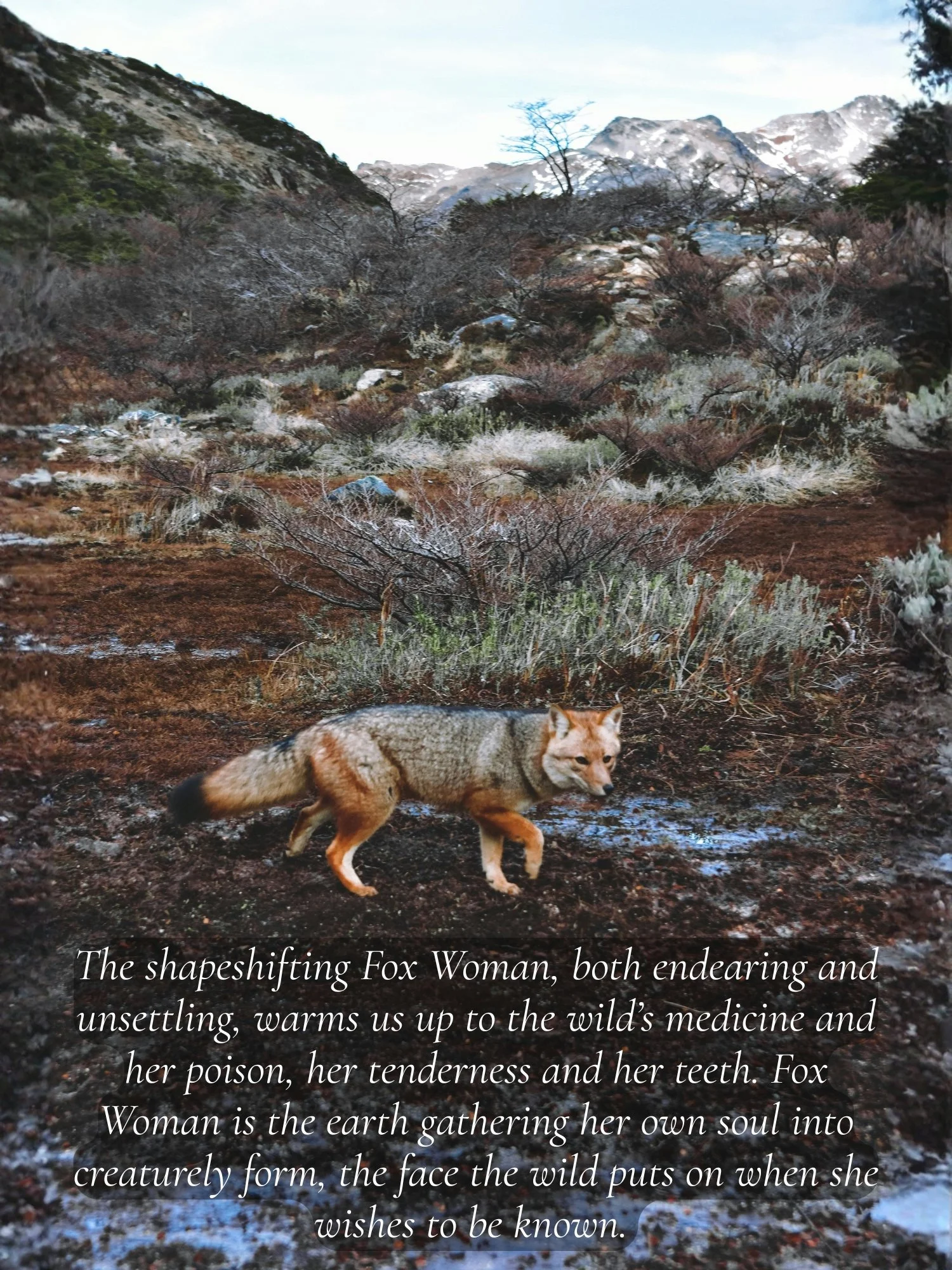
Yet Fox Woman does more than dissolve the boundary between human and natural worlds, she carries a more difficult wisdom in her tail: she reveals what this belonging asks of us. Fox Woman does not bring us only the landscape’s comfort, but its unsettling qualities too. She acquaints us with nature’s medicine and her poison, her tenderness and her teeth. This old wisdom echoes wherever her story takes root. In Ireland, she appears as Sionnach Sidhe, a fox fairy whose beauty draws humans toward the Otherworld while reminding them that what is wild cannot be possessed. In Scandinavia, she emerges as the Huldra, a forest guardian whose beauty conceals a fox tail—a reminder that the gentle face of the wild and its untamed nature have always belonged together. In Finland, she races across the night sky as Revontulet, the “fox fire” that becomes the northern lights, leaving behind a trail of wonder that can be witnessed but never held. Wherever her paw prints fall, she carries the earth’s oldest paradox: that what nourishes us may also humble us, and what appears gentle may also remain untamable.
Among the Inuit of Labrador, Canada, she shows up as a Fox Wife. In an Inuit Fox Wife tale, preserved through multiple tellings and retold in contemporary form by Inuk storyteller Beatrice Deer, Fox Woman appears as a being whose human and animal selves cannot be separated. Martin Shaw’s retelling of a Labrador Inuit version similarly reveals the wound created when the human world welcomes only the parts of the wild that it finds beautiful or familiar. A lonely hunter returns to his cabin to find Fox Woman quietly preparing him a meal. He falls in love with the woman before him, yet recoils from the scent of her fox tail, insisting she leave it outside. She tells him she does not come without her tail; to welcome her is to welcome all of her. When he refuses, she disappears, leaving no trace but the ache of what he failed to recognize. Fox Woman leaves because she cannot survive selective love. To ask her to leave her tail outside is to ask the living world to surrender everything in it that resists our comfort. Yet the forest has never divided its gifts from its dangers. The river does not separate its nourishment from its flood. The earth offers medicine and poison from the same hands. Fox Woman simply refuses to pretend otherwise.
Through Fox Woman, we begin to enter the living world's own way of knowing—to feel what it is like to be asked to surrender a part of one's nature in order to be embraced. She reveals a love larger than preference or possession: a love that does not separate beauty from terror, gift from poison, gentleness from ferocity, but gathers them into a greater belonging. Fox Woman refuses the fantasy that love can exist without wildness. In doing so, she returns us to the threshold where the earth and the soul become whole—not by embracing only what is easy to love, but by welcoming the fullness of what is alive. I love Hayao Kawai's observation that in ancient Japan, a story ending with a beautiful scene of nature was considered more desirable than one where lovers marry or conflicts are resolved. There is something radical in finding deeper satisfaction in that. It speaks to a worldview in which the deepest consolation isn't that our personal stories are neatly resolved, but that love and loss, pain and tragedy recede into the background of a timeless beauty of something much larger. The wild is not merely the setting for our dramas—it is the central character of the story. Perhaps that is the earthly orientation Fox Woman offers us all along.
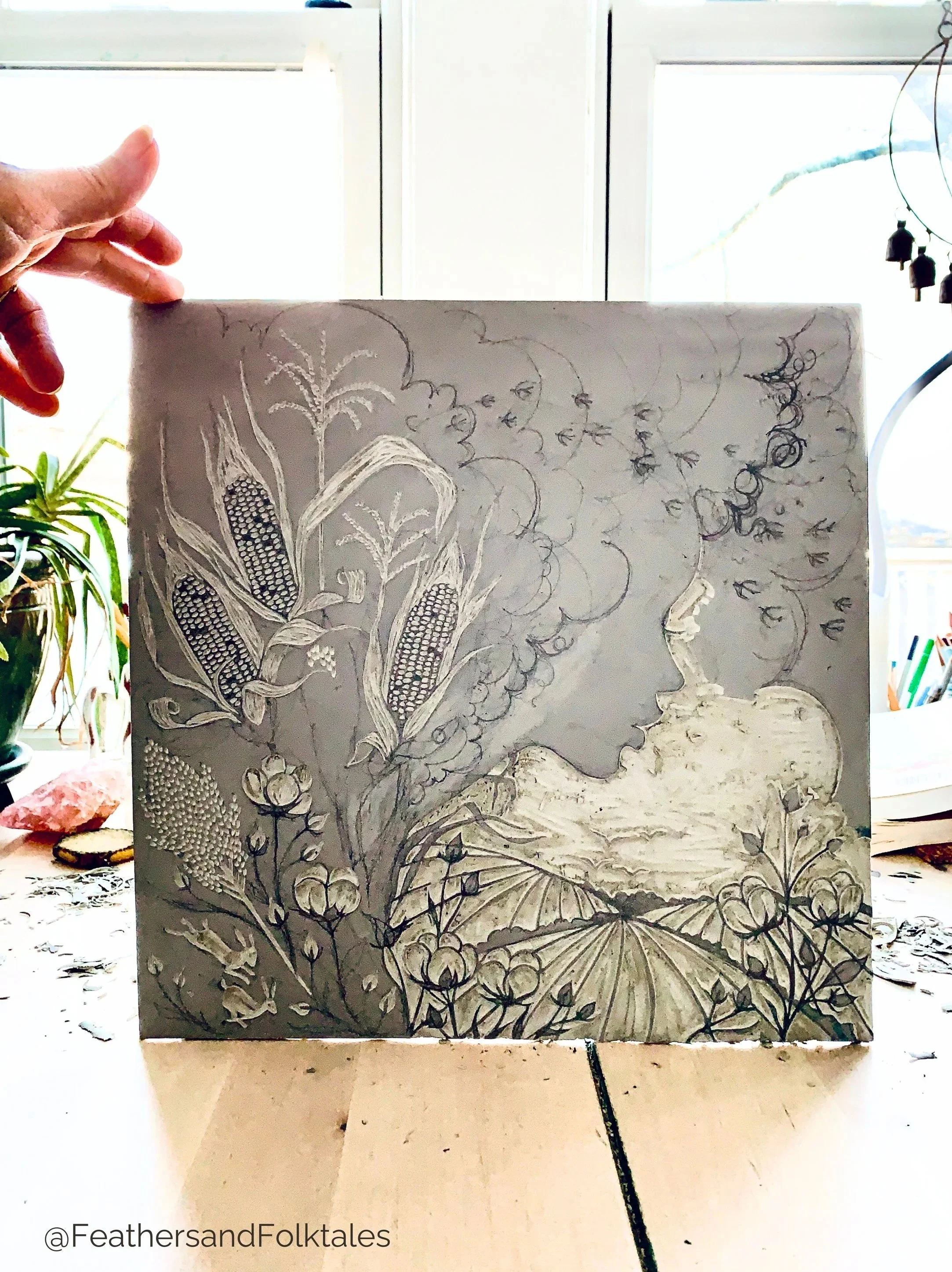
Cloud Princess, a folktale from Eswatini, where we enter into the heart of a Cloud. Here, in the marriage-place of worlds, cloud and wild consciousness, earth and imagination, become inseparable.
If Selkie teaches us the belonging of the coast, and Fox Woman awakens us to the wild's inseparable gifts and shadows, then Cloud Princess invites us into another expression of the living world's embodied experience altogether. High above the maize, cotton, and sorghum fields of Eswatini, Cloud looks down upon the earth with the patient gaze of the sky itself, and through her story, we begin to inhabit the heart of Cloud. Looking down upon the world, she sees greed spreading across the land, yet her attention settles upon one poor man whose quiet generosity endures despite his poverty. When he nurses an injured white bird back to health, she reveals herself as Cloud Princess and offers him a single wish. Believing himself unworthy of her love, he wishes to become handsome, wealthy, and princely. But Cloud Princess gently tells him he already possesses the qualities she cherishes most: kindness, generosity, and gentleness. Through her eyes, he comes to recognize what he could never see alone—that the measure of a prince is not wealth or status, but the way he gives himself to the world.
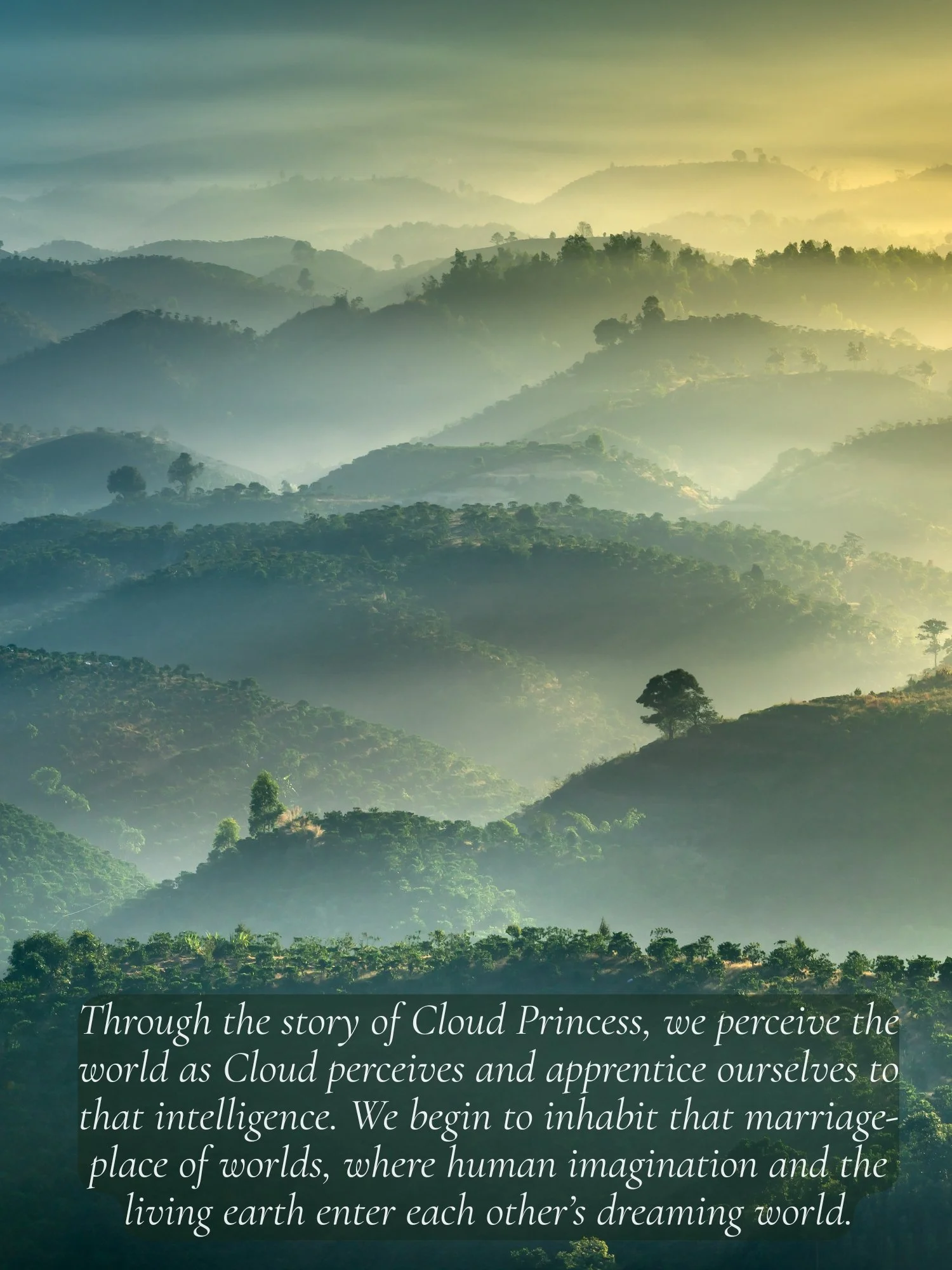
Like Selkie and Fox Woman before her, Cloud Princess is a window into the living world's imagination. For a moment, we perceive as Cloud perceives. Cloud does not withhold her rain until the deserving appear below. She drifts over field and forest, village and wilderness, offering herself without calculation, pouring life upon the grateful and ungrateful alike. Through Cloud, we enter this generous way of seeing that asks us to release the illusion of human separation from the living world. The generosity of Cloud Princess echoes the Emaswati concept of buntfu (related to the concept of ubuntu also known as botho, vhutu or umundu in other Southern African languages) which means “humanity” or “being human”. As Sizakele Danke and Moeketsi Letseka write, buntfu is a shared sense of communal interdependence - an African ethos where the orientation is less towards the self only and leans more towards caring, sharing, reciprocity, dignity and compassion for the well-being of a shared community. It is an understanding that one's experiences are never entirely one's own. Buntfu is an African indigenous ontology and epistemology captured in the maxim: umuntu ngumuntu ngabantu, which translates to English as: “a person is a person through other persons”. Cloud Princess extends this wisdom beyond the boundaries of human community: she does not give because another has earned her generosity; giving is the very expression of what she is. This heroine in the form of Cloud is a heroine’s body the living world inhabits drifting her way into our human storied world so that we can meet her face-to-face - and in this case, give a name to her Cloud world view: buntfu. Here, in the marriage-place of worlds, Cloud and human consciousness, earth and human imagination, become inseparable.
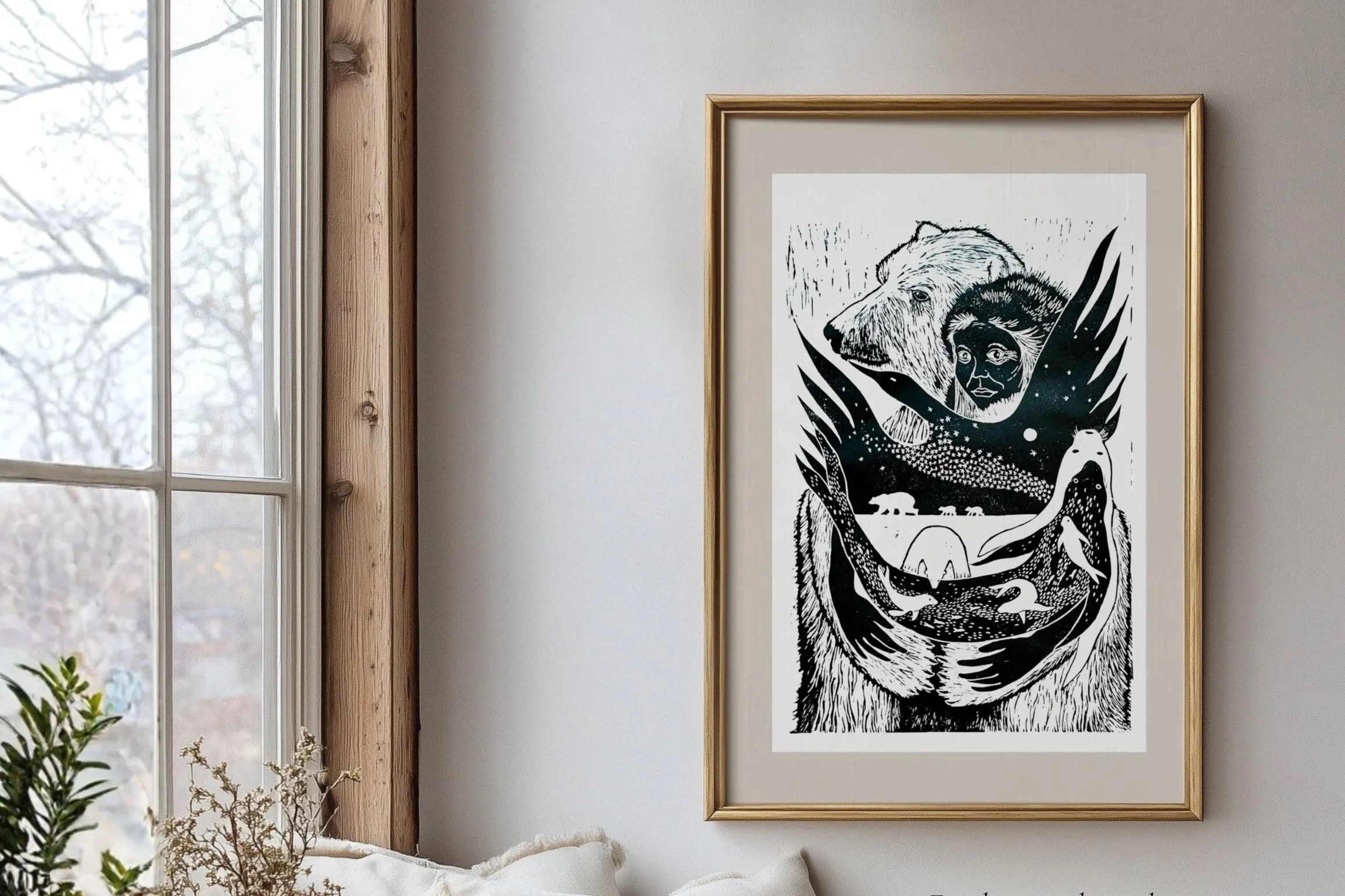
Selkie’s journey opens us up to living in fidelity to sea and shore. Fox Woman introduces us to nature’s medicine and poison, her tenderness and her teeth. Cloud Princess warms us up to an earthly intelligence of radical generosity. Bear heroines invite us into their sacred den: a living space where psyche and nature, creature and cosmos, curl together as one. Here in story, Bear gathers us close—not to keep us unchanged, but to bear witness and hold us as transformation takes root, revealing the deeper truth her stories carry: that nature itself is a sacred witness, a vast den in which we are sheltered through the dark seasons of the soul.
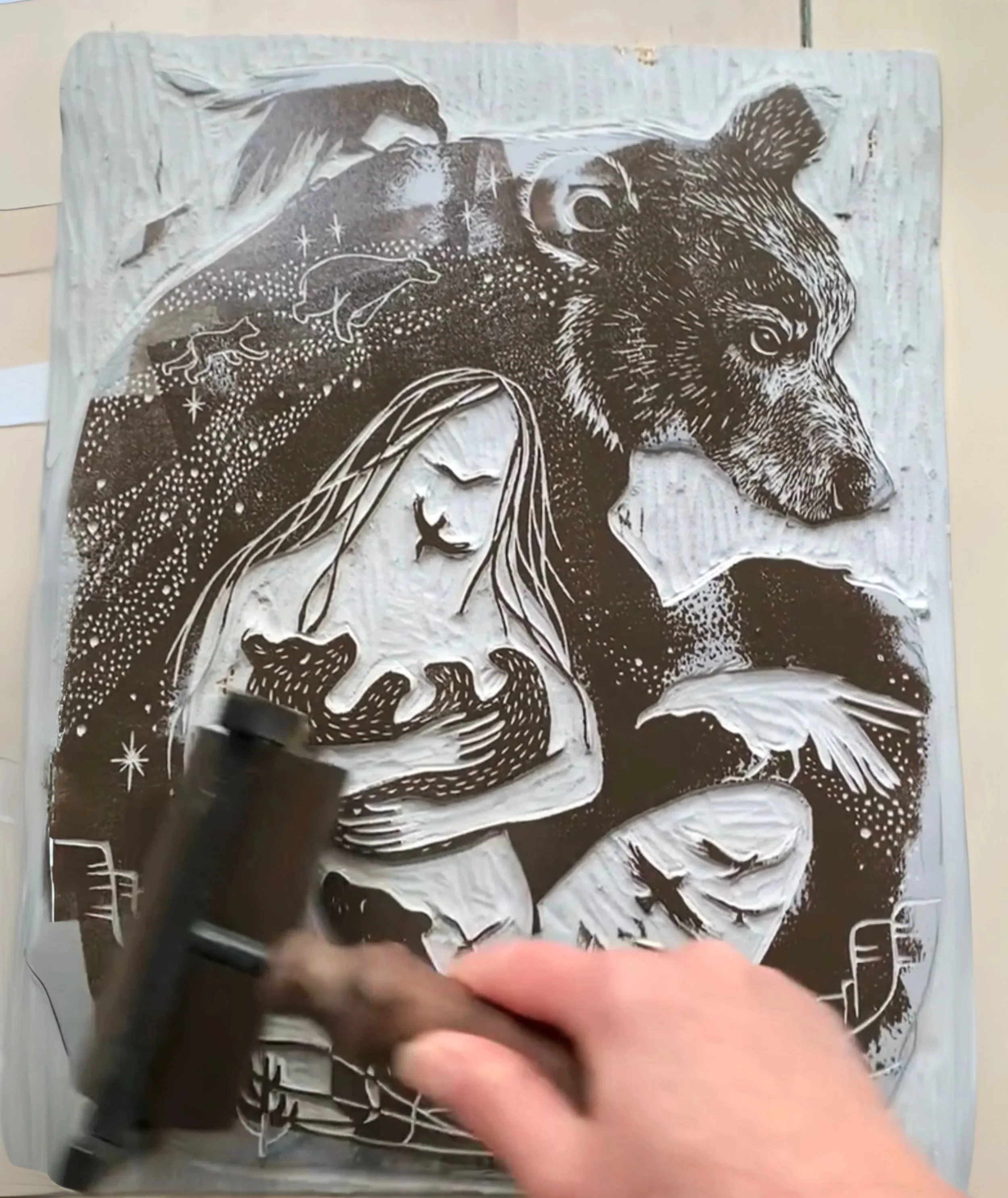
Across the American Southwest, Bear appears as Osa, the medicine keeper, named after the wild root osha—often called “bear root” or “bear medicine.” Bear seeks out this plant when spring returns, rolling in it, chewing it, and rubbing it into her fur as a ritual of cleansing and awakening. For many Indigenous communities of the Southwest and Rocky Mountains, osha has long been revered as both medicine and ceremony, part of an ancient conversation between land, animal, and human.
Bear’s medicine is mirrored in story. In the Southwestern folktale Tres Osas (The Three Bears), retold by Dr. Clarissa Pinkola Estés, three elderly curanderas—herbal healers, ritualists, and weavers—arrive when a young woman is given the impossible task of spinning straw into gold overnight. They do not rescue her through force, but through presence. They sit beside her, weaving with her, asking only that she remember them and welcome them to her wedding. When the soon-to-be bridegroom recoils from their weathered old bodies, the three curanderas continue to accompany him through the trials that follow. They do not spare him the journey or remove his suffering; they remain as witnesses until fear loosens and humility takes root. Through their presence, he is transformed and learns to approach love with a different heart. At the end, they return to the forest, revealing themselves as the bears they always were. Here, Bear emerges as a guardian of transformation: a presence that arrives when the threads of life begin to unravel and stays until something new can be woven. She does not erase what is broken; she holds it within a larger pattern of survival, kinship, and continuity.
Sometimes the Bear heroine does not take human shape so that we can recognize her. Sometimes she arrives as Bear—fully herself—and invites us to meet her there. Among the Hopi, as recounted by Sonja Grace in Dancing with Bear and Raven, Bear and Raven appear as companions through the passage between worlds. When a woman dies unexpectedly, leaving two children behind, Bear walks beside her through the threshold, offering reassurance, and gentle guidance as the woman faces her grief and losses. Bear does not erase the sorrow of the crossing, or hurry through what breaks the woman; she becomes a presence strong enough to hold it. She becomes a den for grief—a sacred space where loss can rest until it begins to take a new shape, where what has been wounded can be tended, and where a new self can slowly emerge. The question this folktale raises is this: What if the deepest wisdom we have been following is not only found in the places where human and animal exchange forms, but in the moments when the living world turns toward us without surrendering its own wildness? Unlike the heroines who cross between forms, Bear teaches what the others began to reveal: the living world does not need to become human for us to belong to one another, she builds a den at the threshold and invites us in to rest there.
In Norwegian folk memory, Bear stands beside the birthing bed. A paw drawn gently across a pregnant belly was said to ease labor’s pain, and those who had survived a bear’s mauling—bodies rearranged by proximity to death—were trusted as the best midwives. They had already crossed a perilous threshold and returned; their flesh remembered what that passage demands. The encounter with Bear did not grant power over birth, but familiarity with its danger and intensity, a bodily knowledge of that dangerous passage and how to stay present at the edge where life breaks open. Here, Bear is not metaphor alone. Bear moves through hearth and household, reminding humans that life enters the world through vulnerability held, through bodies shaped by what they have endured. Birth, like all true transformation, requires companionship, endurance, and the courage to remain with pain without turning away. Bear heroines offer that presence here, keeping watch in the dark until the new life finds its way through.
Though these are only a few creaturely heroines among countless others, a pattern begins to emerge. Each creaturely heroine opens us up to that marriage-place of worlds, the sacred meeting ground where the earth dreams herself into human imagination, and human imagination learns to listen in return. It reminds me of an ancient wisdom gifted to us by the Chinese Daoist philosopher Zhuang Zhou (often called Zhuangzi), after he had a dream that he was a butterfly. In the dream he was fluttering about happily, unaware that he was Zhuangzi. Then he awoke and found he was indeed Zhuangzi. But he did not know whether he was Zhuangzi who had dreamed he was a butterfly, or a butterfly now dreaming it was Zhuangzi. . . Born from feather and fur, hide and wing, human body and ancient story, the creaturely heroine captures this ancient way of seeing nature and human entwined in each other’s dreams. Through the creaturely heroine’s ecstasies and griefs, her shapeshifting and return, we apprentice ourselves to the earth’s embodied intelligence. We learn that the living world is not a backdrop for the human story, but a storyteller and dreamer in her own right. To encounter the creaturely heroine is to enter an ancient conversation—the one between human imagination and the more-than-human world. For a moment, we remember what the oldest stories have always whispered: that we do not dream alone. We enter, however fleetingly, the dreaming of the earth herself.
References:
Abram, David. (1997). The Spell of the Sensuous: Perception and Language in a More-Than-Human World. Vintage Books.
Bethencourt, Kahran & Regis (2023). Crowned: Magical Folk and Fairytales from the Diaspora. which includes classic well known fairytales as well as fairytales from the African diaspora and from the African continent. St Martin’s Press.
Danke, Sizakele, and Moeketsi Letseka. “Tradition and Modernity: Thoughts on Buntfu in Embhikhwakhe Community, Eswatini.” Indilinga: African Journal of Indigenous Knowledge Systems, vol. 21, no. 1, 2022.
Deer, Beatrice. The Fox Wife. Illustrated by D. J. Herron, Inhabit Media, 2019.
Estés, Clarissa Pinkola. The Dangerous Old Woman: Myths and Stories of the Wise Woman Archetype. Sounds True, 2010.
Grace, Sonja. Dancing with Raven and Bear: A Book of Earth Medicine and Animal Magic. Findhorn Press, 2018
Kawai, Hayao. Dreams, Myths and Fairy Tales in Japan. Translated by James G. Donat, Daimon Verlag, 1995.
Kawai, Hayao. The Japanese Psyche: Major Motifs in the Fairy Tales of Japan. Edited by Murray Stein, translated by Hayao Kawai and Sachiko Reece, Spring Publications, 1988.
Mandela, Nelson (2002). Favorite African Folktales. W. W. Norton & Company.
Momaday, N. Scott. In the Bear’s House. University of New Mexico Press, 2011.
(Podcast) “Bear Culture: Scandinavian bear folklore with Olle Möllervärn.” Fair Folk Podcast, episode by Fair Folk, 11 Apr. 2023.
Shaw, Martin Fox Woman (Shot 2, 2020) “Martin Shaw: The Hunter and the Fox Woman”, Youtube Video available at: https://www.youtube.com/watch?v=8YI8TTkT8dI
Thomson, David. The People of the Sea: A Journey in Search of the Seal Legend. Oxford University Press, 1954.
More blog Posts


Many maritime myths are stories of love and loss, where the ocean is not just a backdrop but a character in her own right. Like a great mother who bears witness to sorrow, her saltwater depths cradle and honor the tears that fall. Just as salt has long been used as a healing salve, the sea itself becomes a balm—ritualizing grief and softening it into something the heart can hold, both for those who live the tale and those who witness it.