
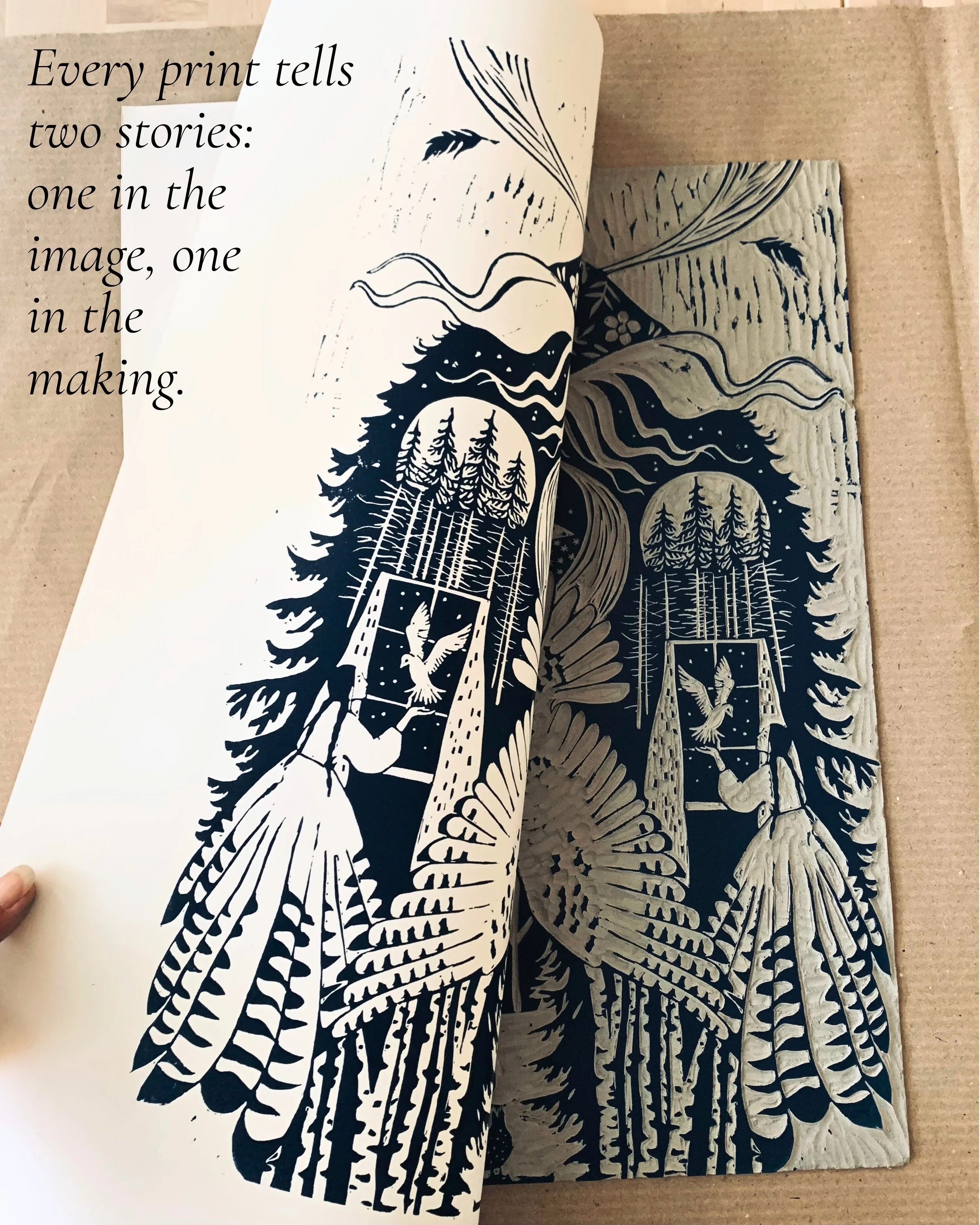
Linocutting - also known as linocut printing, or linoleum art - is a modern form of printmaking which historically began in China, and has since had a long global journey. Very similar to traditional woodblock printing where a design is carved into wood, linocut printmaking involves carving a design into a block of linoleum. Ink is then rolled across the carved surface and pressed onto paper, leaving behind a beautiful, one-of-a-kind impression. Linocut prints, like woodblock prints, carry the marks of the maker—the rough edges, the textures, the slight emboss of hand pressure when printing are not hidden, they are visible and become part of its character. These small imperfections give each print a rustic, old-souled and storied charm. It’s a craft that pairs naturally with folklore, folktale, fairytale themes and motifs, preserving old-time tradition and wisdom using modern materials.
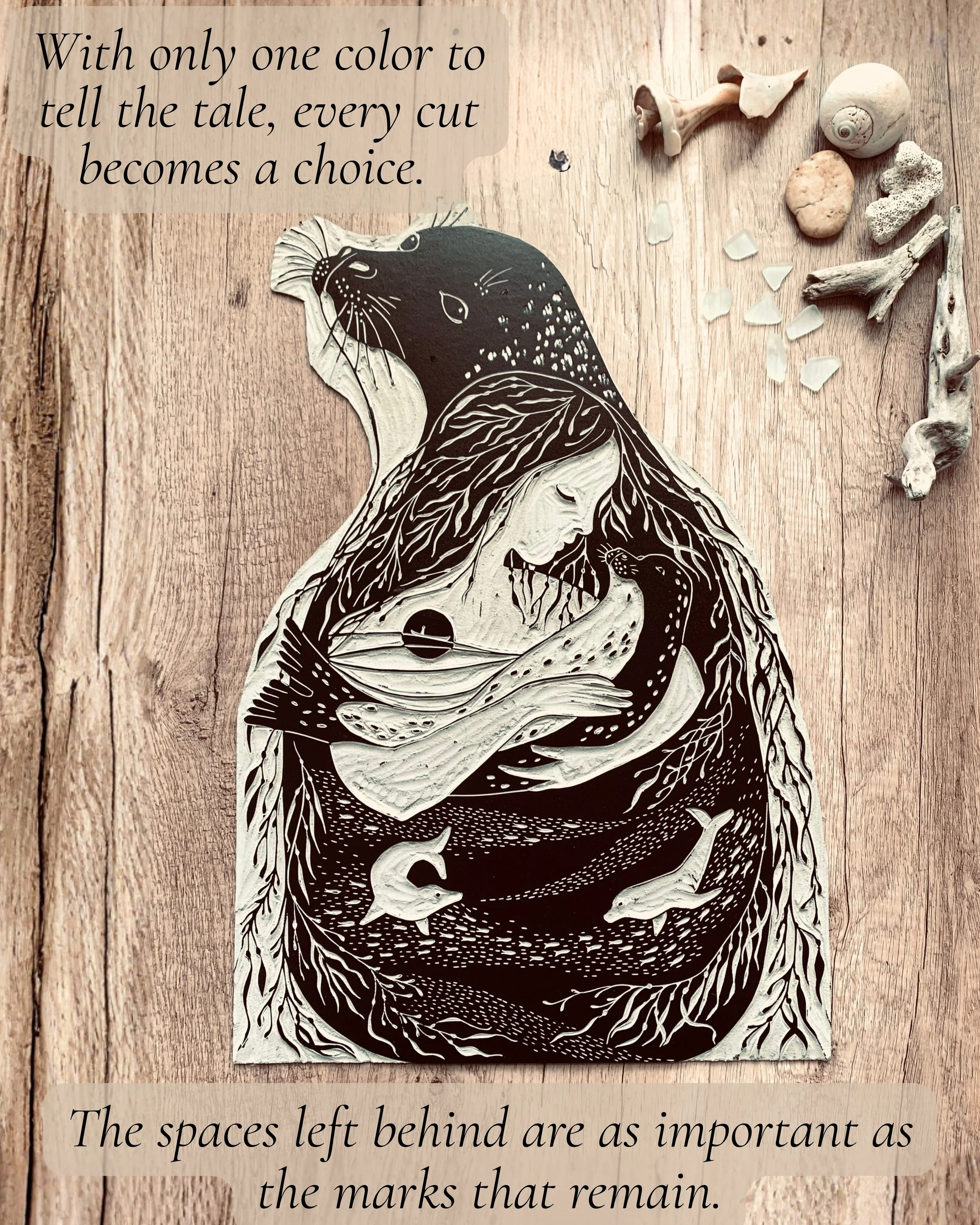
First, a great deal of thought goes into the design. My own linocut prints often use only one color of ink, and in the simplicity of using only one color, something else must speak. Every carve becomes a deliberate choice. The spaces left behind are as important as the marks that remain. Shapes and textures, light and dark, positive and negative space begin to carry the weight of the image and story conveyed.
Once the design process is complete, next comes the carving that is done with small gouge tools. When the linoleum is rolled with a layer of ink, and paper is hand pressed on the top, the carved-out portion creates a negative area that is left white. The final prints are bold and powerful, with high contrast between paper and ink.
Unlike digital or machine-made prints, the hand-carved lines, slight irregularities in ink layers, the marks of the hand are not hidden, but are what sets handcrafted linocuts apart. In this way, linocut holds something akin to the Japanese idea of kintsugi—a philosophy that honors what is imperfect, impermanent, and incomplete. These values also live in wabi sabi, a worldview that finds beauty in the worn and weathered, the handmade and humble.

Here showing the various different textures possible in a linocut print: the hare’s fur, the curves of the hare’s body and women’s bodies, the fine blades of grasses and rustic carved-out background showing through. With only one color to work with, careful and deliberate designing allows for a balance and harmony of lights and darks, positive and negative contributing to the warm cozy aliveness of the hare, capturing an earthy rooted storytelling magic and this archetypal trio of hares, women and the moon into one unifying composition.
Since linoleum is softer than wood and has no grain, it yields more readily to the movement of the blade, offering more ease and opportunity to carve out a wider variety of details and precision than woodcuts. Where wood has its own direction and resistance (and, because of this, its own charm!), with linoleum its possible to etch out fine feathers, individual strands of fur, and smooth, curved textures (such as the rounded back of a seal or wavy flowing hair). These distinctive naturally-occurring textures are then able to emerge from the block while the final print still retains a rustic, old-time character, not unlike the beloved folktales themselves: timeless, weathered, and enduring.
Both printmaking and storytelling are vessels of folk wisdom, one is crafted by hand the other spoken by mouth - yet both carry the weight of timeless tradition, and rustic charm. FeathersandFolktales offers a window into a world where the work of handwork and the rhythm of story entwine, root us deeper and bring old wisdom to life. I hope what I offer stirs something in you - a remembering, a returning, a quiet kind of magic.
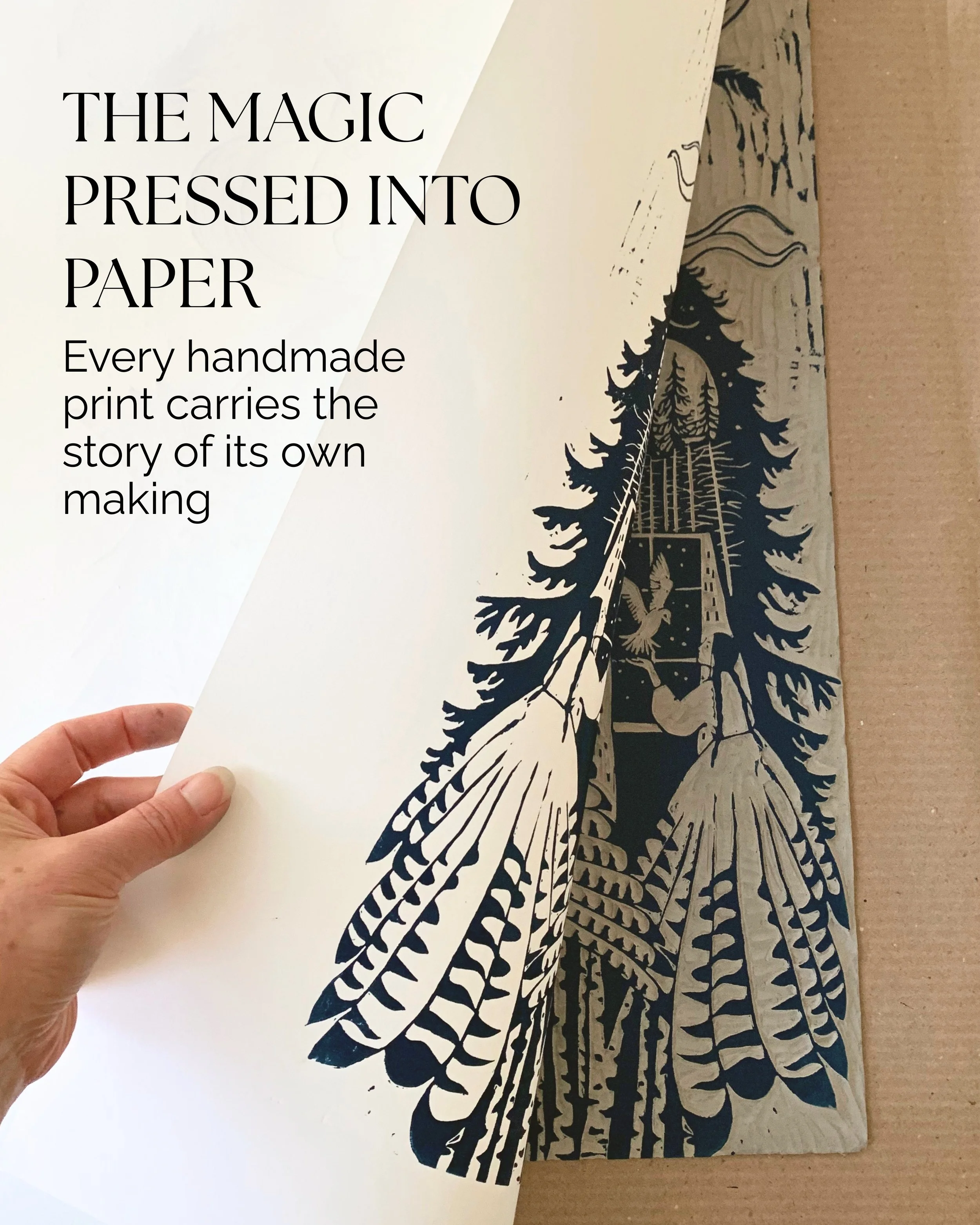
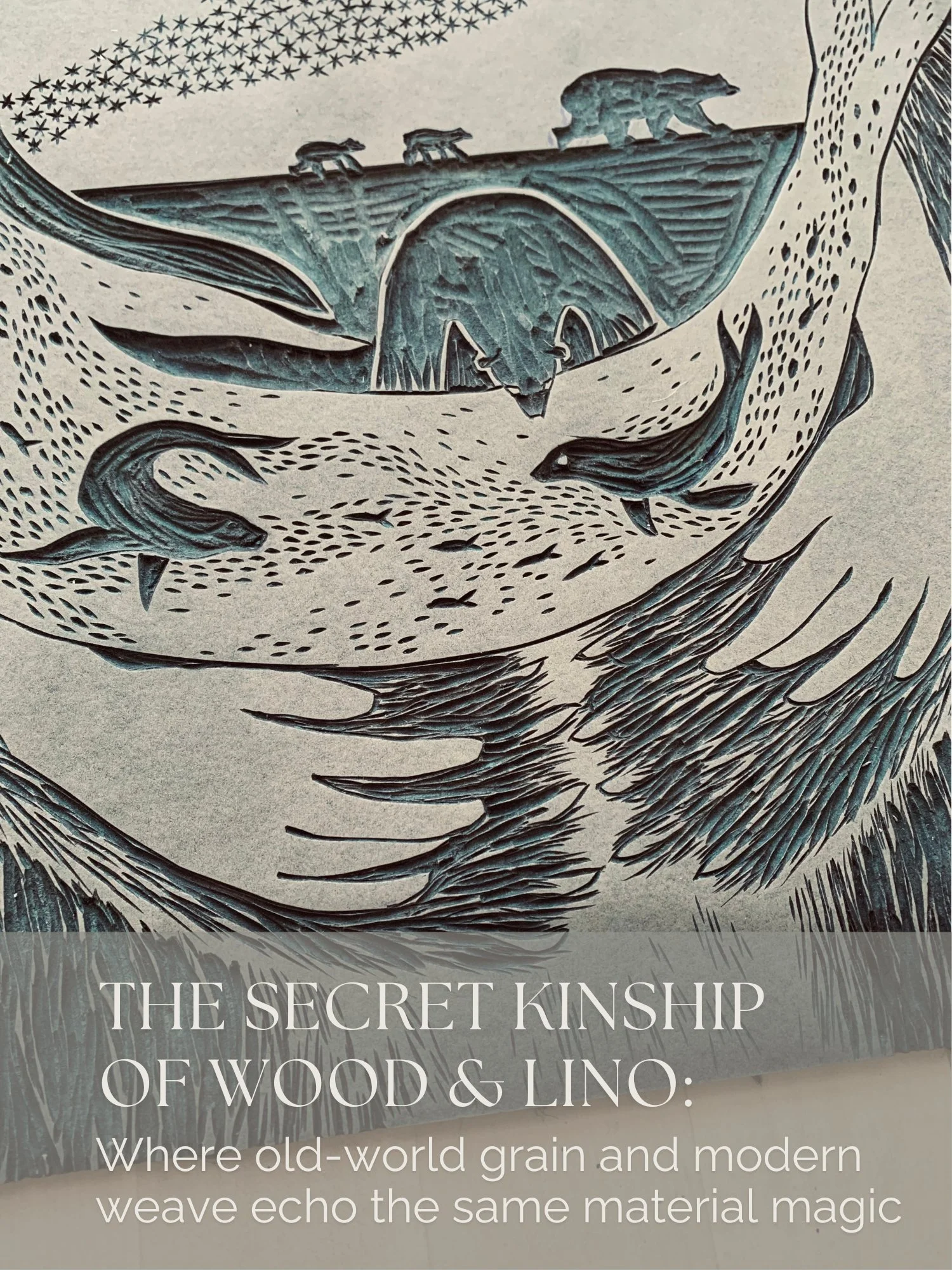

Linocut art carries an ancient printmaking tradition into the present: a design is slowly carved into a block, inked, and pressed by hand, leaving behind not only an image, but the traces of the hands that made it. Every print carries the story of its making, from the textures of hand-carved lines and the impressions left by pressed paper to the subtle variations in the layer of ink. These marks of the hand are woven into the image itself, giving linocut its rustic charm and timeless, storied character.