
Some landscapes continue dreaming long after they have vanished. The Vietnamese mythical Dragon and Phoenix coupling belong to one such world - an ancient landscape of shifting coasts and mingling waters whose full history has only recently begun to come back into view. Though that landscape now lies beneath the sea, its dreaming continues in places of encounter wherever earth and water keep one another company—where marshes become mangroves, where rivers wander with the tides, and the edges of the forest slowly learn the language of salt, and coastlines remain wonderfully unfinished. Together the Dragon and Phoenix can be read as giving symbolic form to an older ecological imagination whose currents still flow deep within Vietnamese cultural memory, Phoenix shifts in color, form, and even identity, a weaving of many creatures in one - turtle, heron, snake, goose, swallow; and the Dragon too, is plural embodying heaven and earth, ocean, river, sky, and storm, a being of balance rather than dominance. Together their encounter mirrors the meeting of aerial and aquatic, the courtships of freshwater and saltwater, the marriage of earth and sea. It is as though the landscape incubated and hatched these creaturely bodies through which it might continue becoming—quickening, dreaming, and reaching into our world from its submerged depths, speaking across the deep currents of time.
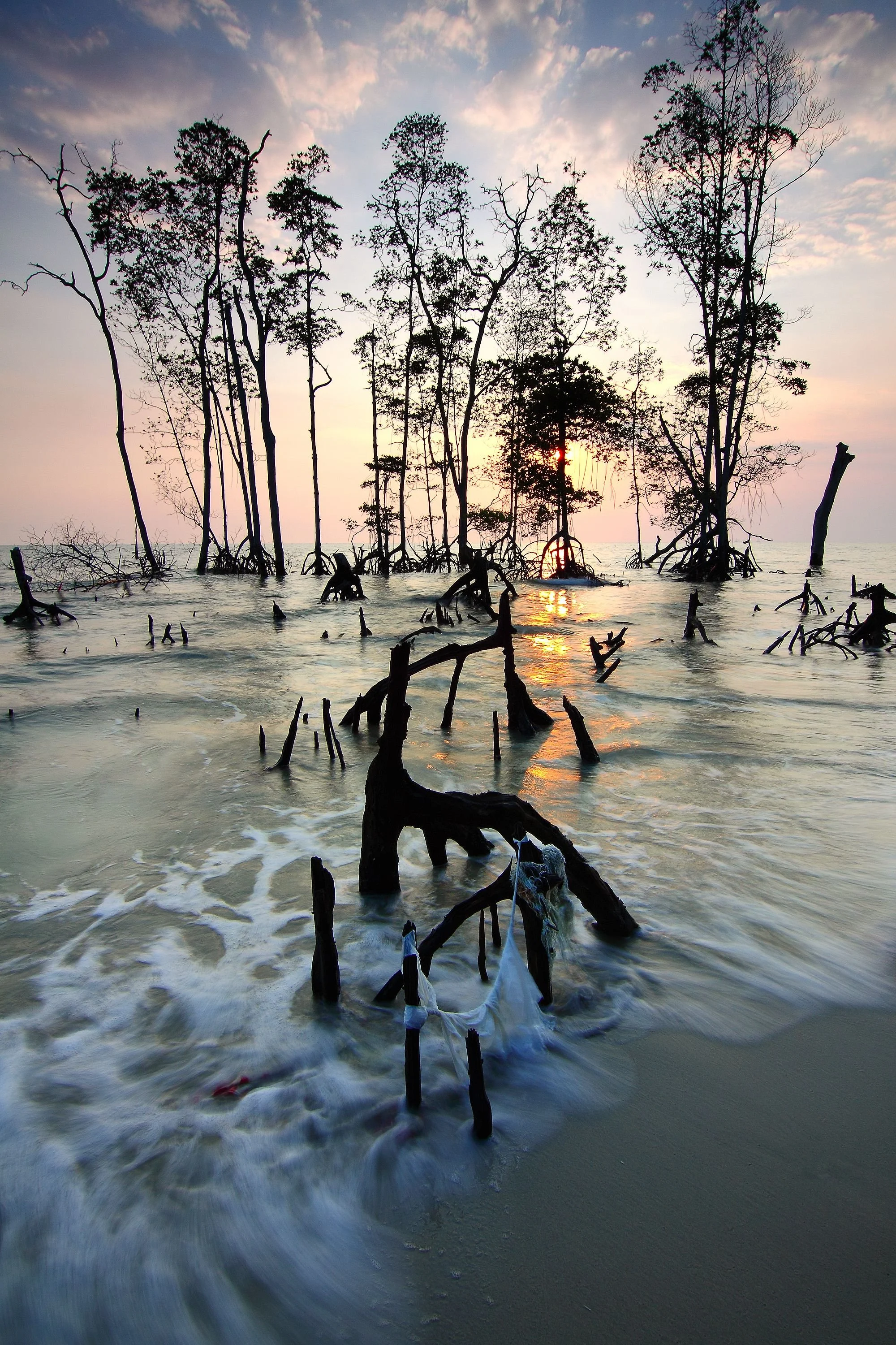
Photo Credit: Pok Rie on Pexels
Beneath the layers of time, the Vietnamese coastline once stretched outward into the world, its shores reaching far beyond the coastlines we know today. Geological, and paleoenvironmental research shows that during the Ice Ages, global sea levels fell by more than 120 meters (roughly 400 feet), exposing a vast continental shelf beyond the coastline of present-day Vietnam only to rise back up to its present day levels with the glacial melting. While no one can reconstruct what it may have felt like to live in that world in human time in every detail, the science invites us to imagine a persistent, unstoppable encroachment of the sea, advancing steadily inland —an earth-and-water-woven realm, consisting of a dynamic coastal mosaic of braided rivers, estuaries, coastal wetlands, mangroves, tidal flats, brackish lagoons, and marshes. Year by year, as the land sank incrementally beneath rising waters, saltwater spread through valleys and river mouths, remaking forests as estuaries, and estuaries as shallow seas. Shellfish beds came and went; mangrove forests shifted with the tides; wetlands breathed outward and inward; coastlines wandered slowly across the land. What we know today as “Vietnam” was not a fixed territory but a continually evolving geographical and temporal ecotone, where transformation was the only constant. It is as though the landscape itself were whispering: “I am earth becoming water, and water becoming earth.” Perhaps it is not accidental that the Vietnamese word for “country,” đất nước, carries this truth so beautifully (đất meaning earth and nước meaning water), expressing a world of both-and rather than either-or.
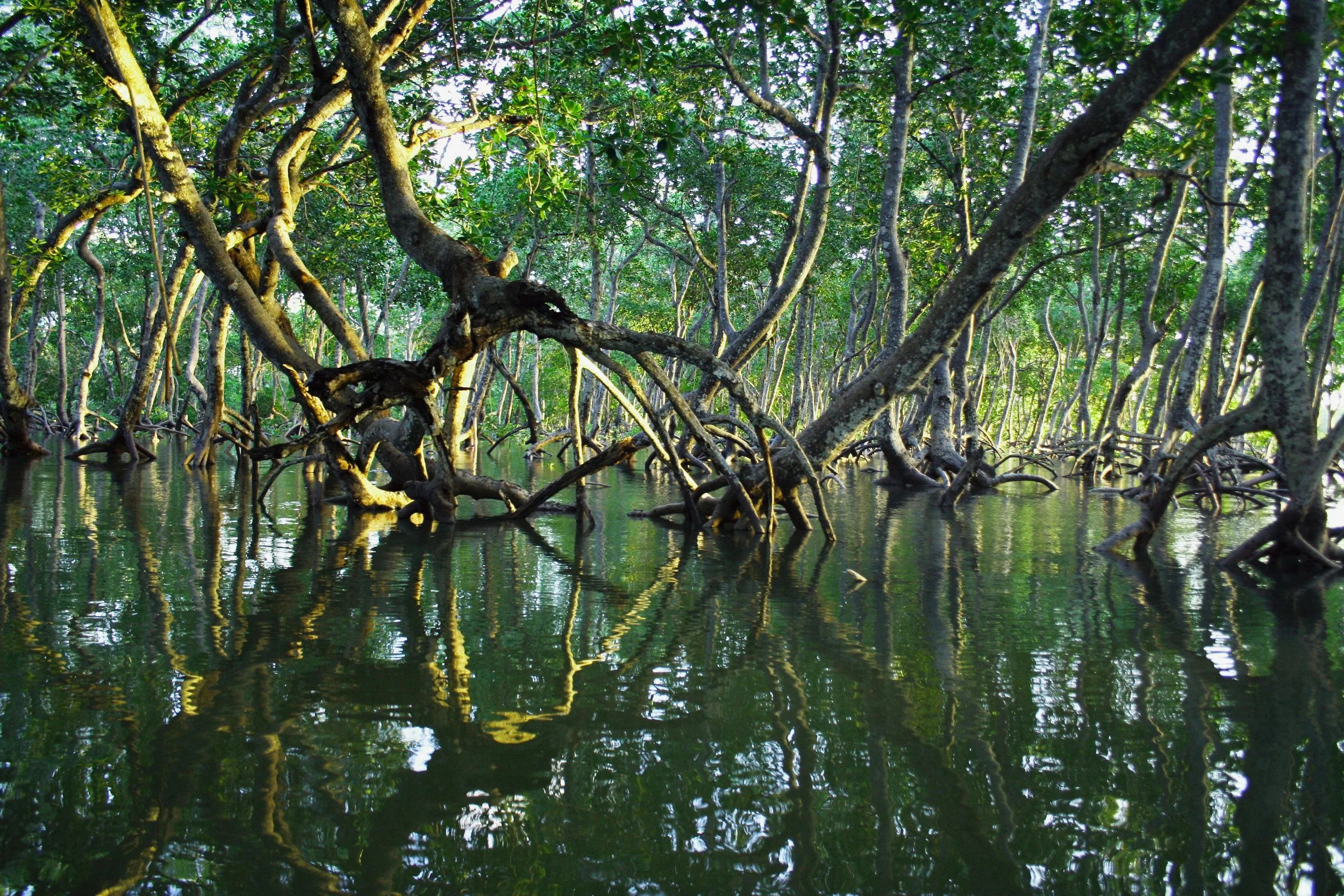
Mangrove. Photo Credit: Timothy K on Unsplash
The people who lived within this ever-changing world learned to survive not by resisting transformation, but by living within a landscape with a migrating boundary between forest, wetland, and sea. I can imagine them moving with the tides rather than against them—casting nets through reed-filled floodplains, following rivers that wandered of their own accord, gathering shellfish from wetlands that swelled and receded with the seasons, and carrying within them not fixed maps but an intimate memory of the tides' rhythms. They would have shared this world with frogs calling from the reeds, crabs scuttling across tidal mudflats, fish threading through flooded forests, a plethora of waterfowl, wading birds and serpentine and reptilian amphibious life forms - creatures equally at home in water, on land, or moving between the two. It was a world of thresholds—restless, fecund, forever remade. In such a world it no longer seems surprising that Dragon and Phoenix should find one another, rising from the ecotonal currents where earth and water, bird and reptile, permanence and transformation continually met. In this courtship of human imagination and living landscape of earth and water, of creature and ecological change, the land dreams herself into creaturely form, hatching more of herself into being in this marriage-place of worlds, a place of encounter and reciprocal becoming.
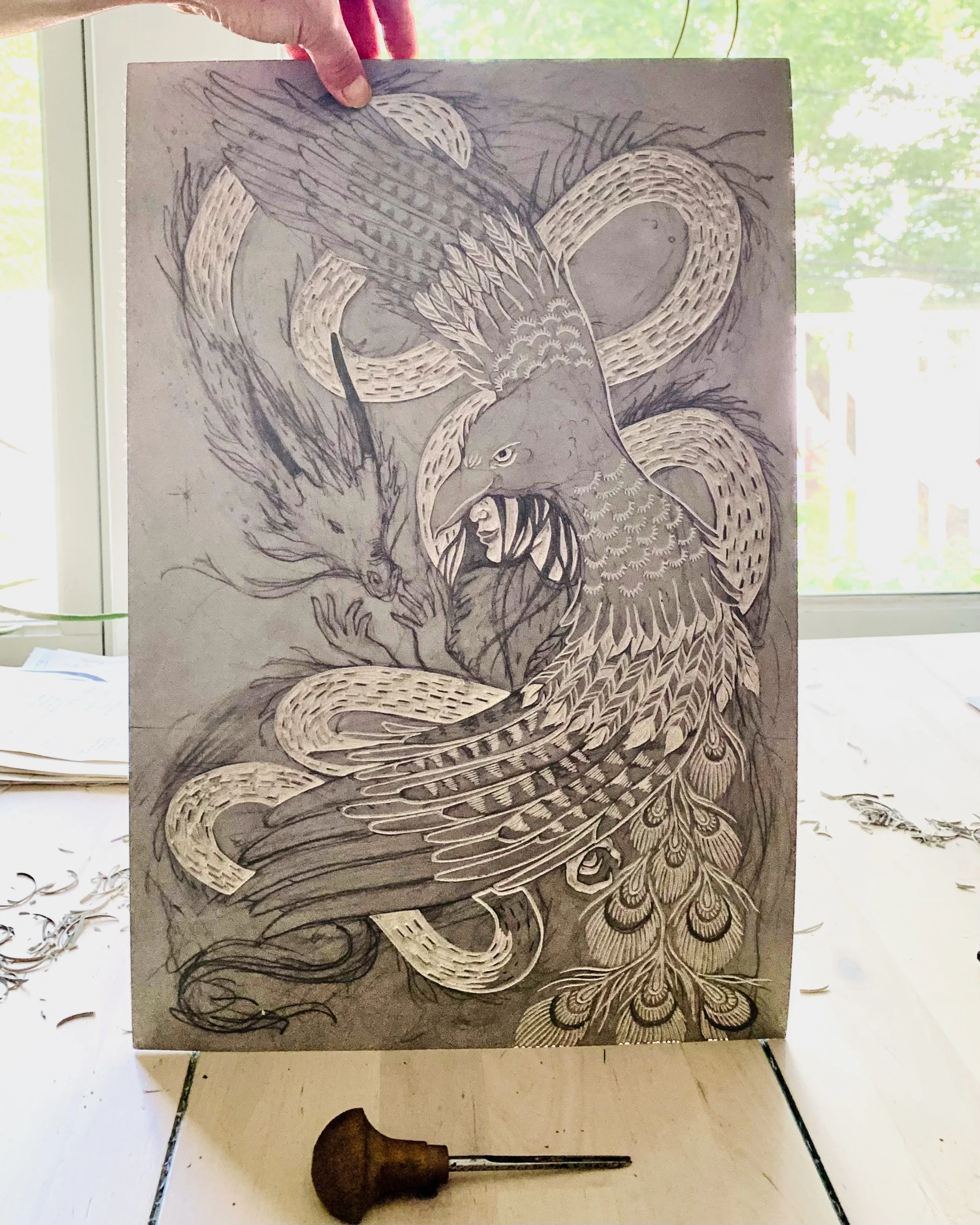
Mid-way through carving Dragon & Phoenix
Like the coastal marshes, estuaries, and mangroves that imagined them, neither Dragon nor Phoenix belongs to a single form - each an assemblage of many lives, refusing the illusion of a fixed identity. The Vietnamese Phoenix - Phượng Hoàng - shifts in color, form, and even species. In fact, a surprisingly large number of the body parts associated with the Vietnamese Phoenix belong to creatures associated with shorelines, wetlands, estuaries, river margins, and seasonal water landscapes including: breast of a goose, back of a tortoise, face of a swallow, tail of a fish (showing not just aerial but aquatic qualities), down and body of a mandarin duck, different colors of waterfowl, and neck of a snake. The name Phượng Hoàng also carries this complexity: Phượng is the male phoenix, and Hoàng is the female phoenix, legend has it these were separate ancient birds who travelled as a couple that later in time became combined into one creature - the Phượng Hoàng. Dragon - Rồng - too, gathers aquatic, terrestrial and amphibian into one body: serpentine in its movement, with lizard-like limbs, antlered horns, flowing whiskers, a bearded chin, and a camel-like snout. As it turns out, wetlands are among the few places where water snakes, crocodilians, giant fish, turtles, nesting waterfowl, marsh birds, feathers, scales, eggs, mud, and waterfowl exist in intimate proximity. The estuary, mangrove and coastal marsh are themselves places of assemblage, where worlds overlap and life gathers at the edges. It is not difficult to imagine how such a landscape might give rise to creatures woven from many bodies—not as fantastic inventions, but as one of the ways the earth gathered herself into a living creaturely form entering into the timelessness of myth.
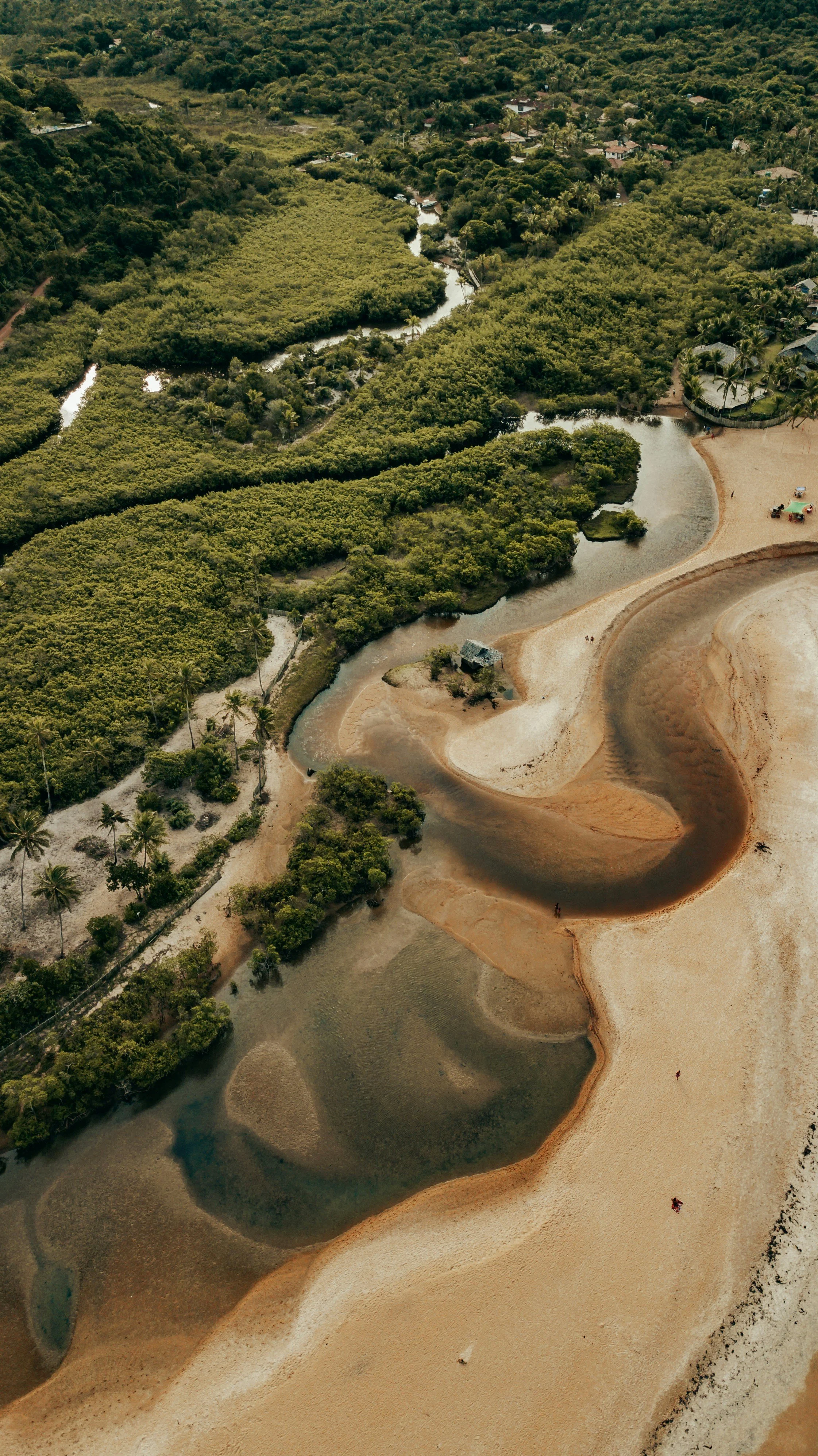
Coastal Estuary. Photo Credit: Marcus Santos on Unsplash.
Dragon and Phoenix are sometimes mistaken for opposites, much like the simplified readings of yin and yang that overlook their deeper interdependence. Yet where yin and yang are expressed as dynamic opposing energetic non-corporeal forces, Dragon and Phoenix emerge as embodied beings—the Dragon has scales, whiskers, breath, horns and relationship to rivers and storms; the Phoenix has feathers, wings, sharp talons, flight, a relationship to the aerial world and transformation. They don't just symbolize the landscape—they inhabit it and they are creatures whose very forms hold the ecological rhythms and memories of a particular ecology, where earth and water, river and sky, feather and scale were always meeting, interweaving, and becoming. Though born from the same earth-water world, each moves through it in its own way—their meaning lies not in struggle or triumph over one another, but in the way they circle and answer one another, each calling the other more fully into being. In their bodies, their meeting and their courtship, the earth-water world gathers its own memory, hatches through feather and scale, a creaturely manifestation of the mangroves, estuaries, wetlands and river deltas where earth becomes water and water becomes earth, where boundaries are not erased but continually remade.
The landscape of the estuary, coastal marsh and mangrove reveals another way of knowing: land and sea do not always require separation, and boundaries between worlds can be places of generative encounter. I have come to recognize this way of seeing as a useful mythic framework for making sense of the crossings and confluences of my own life that transcend neatly compartmentalized categories that we’re often pressured to live within in our contemporary world.
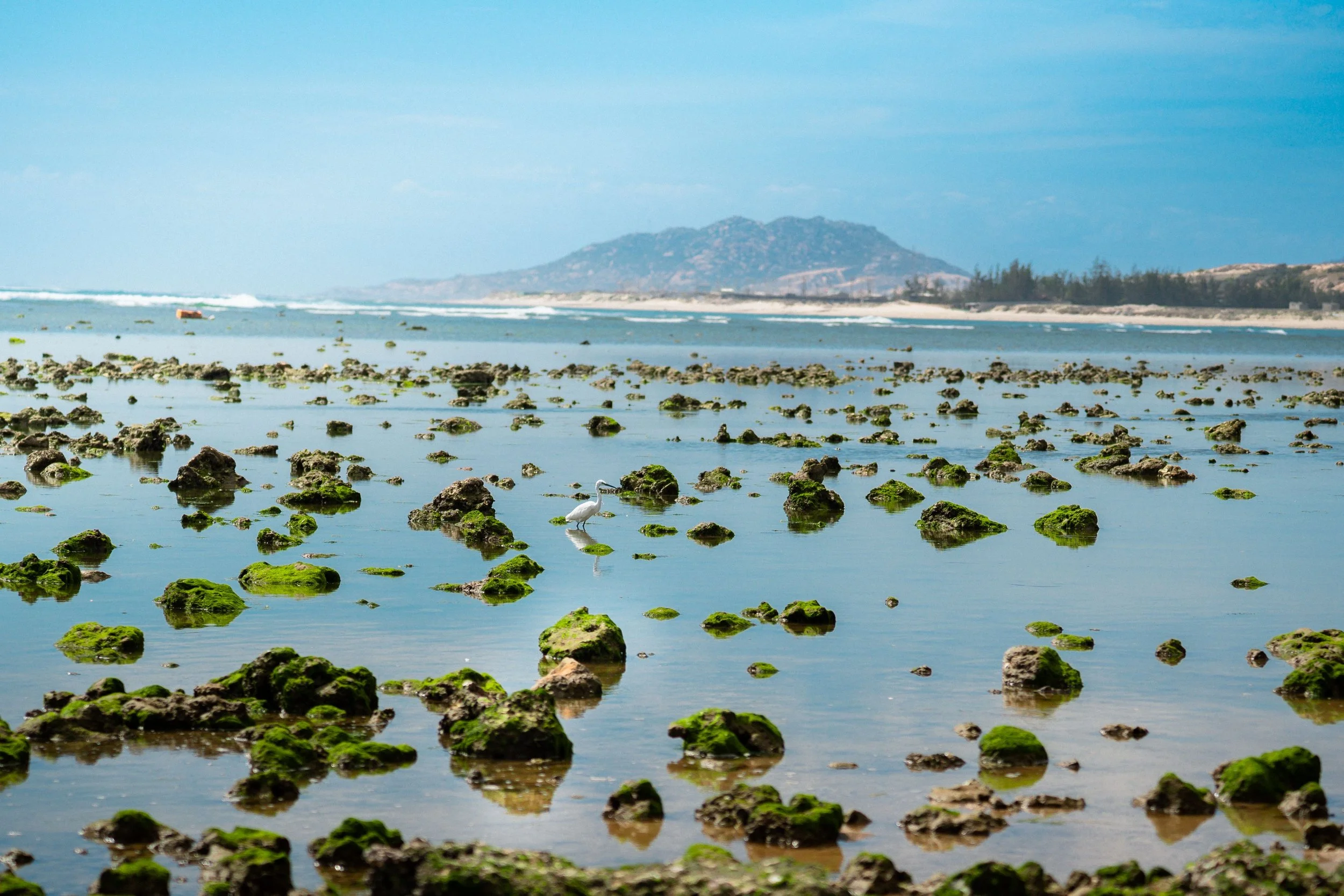
Coastal landscape Vietnam. Photo Credit: Do Truong NghiaX on Pexels
The process of giving birth to my son was one such confluence of two worlds. I had planned a home birth, deeply believing it was the most natural choice. I had a midwife, prepared myself for the birth experience by taking home birth classes, had acquired a small indoor pool to birth in, and imagined and expected the birth to unfold within that world After forty-eight hours of labor, however, I couldn’t handle the pain, and I found myself in a hospital, ultimately giving birth by cesarean section. Through this journey, I found myself living inside an estuarine world in ways I could never have imagined. Like the slow encroachment of the sea upon the land, the landscape of my birth began to change around me. My midwife gave way to a medical doctor; herbal medicines gave way to an epidural. It was as though the tide had come in, carrying saltwater into a freshwater world, changing its chemistry without erasing what had been there before. The birthing experience had become like a mangrove, because the first world remained within me, its currents still moving beneath the surface. Each approach—home birth and medical birth—was never truly separate; they were always meeting, shifting, and responding to one another, each leaving its mark upon the other, leaving eddies and channels of water that shifted directions. I was dealing with a C-section scar while, at the same time, receiving postpartum care, nursing support, and help from my home birth midwives. I would make visits to my hospital doctor, while also continuing to check in with the midwives. Only a few weeks later, after I had settled into motherhood, did I begin to understand how my mangrove experience couldn’t quite fit itself into the politically divided communities of home birthers and hospital birthers. I had somehow become part of both communities, even though each imagined itself as belonging to a drastically different and very separate world from the other. Yet there I was, living in the mangrove between them, where the currents met and mingled, where neither water remained entirely what it had been. What looked from the outside like separate worlds had, from my own vantage point, always been connected. I was in the world of Dragon and Phoenix, where sea and land, wildness and medicine, surrender and intervention belonged not to opposing worlds but to an older story—the ancient story of two forces meeting, changing one another, and becoming something neither could have been alone.
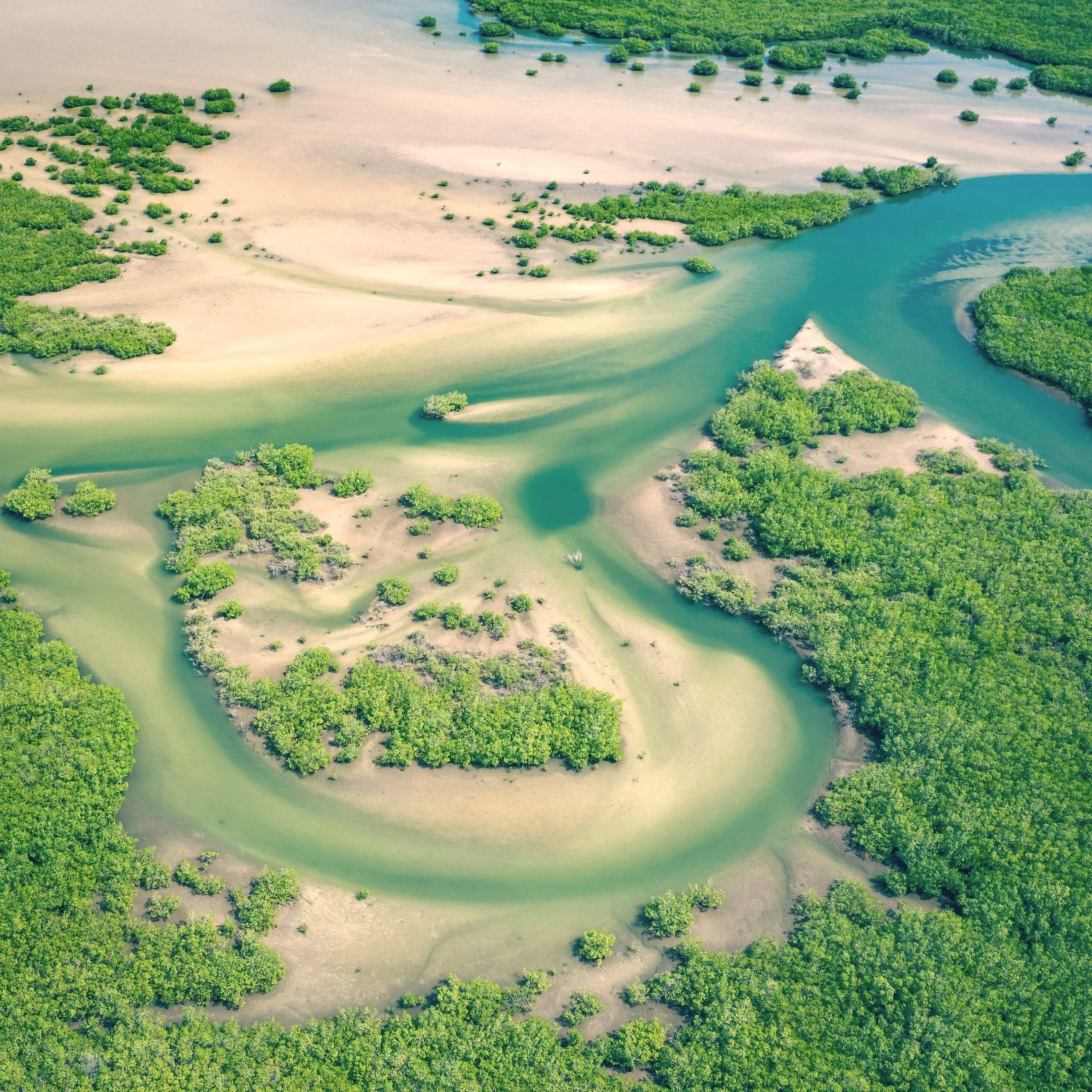
Coastal estuary. Photo Credit: Curioso Photography on Unsplash
Something similar happened a few years later when my son struggled in public school during the pandemic and we decided to homeschool him for two years. This turned out to be a wonderful decision, he thrived on full days of outdoor play with friends and experiential learning. But when the pandemic came to a close, he eventually returned to public school and also thrived there. Once again we found ourselves in the mangrove, between two worlds that were often imagined as separate. The communities around homeschooling and public school were shaped by different currents, carrying different ideas about childhood, education, family, and the world itself. Yet our lives could not be contained by either. We had moved between them carrying sediment, rocks, plant life into the other. The years of homeschooling became a tributary flowing into and shaping his return to public school world; his years in public school were like a tide that carried us into and influenced our homeschooling. Once again, we found ourselves in the world of Dragon and Phoenix, where an ideological boundary centered around education had became porous —a place where different currents of ideas, approaches met, slowed, mingled, changing one another through their encounter, together giving rise to something neither could have become alone. We belonged not to the Dragon or the Phoenix, but to the mystery between them—the ancient dance in which each circled and answered the other, each calling the other more fully into being.
Perhaps this is what it means to see with the eyes of the mangrove: to surrender to the life between worlds, and to let it dream our experiences into meanings that cannot emerge when we believe we must be one thing or the other, land or sea. A mangrove does not ask where the river ends and the sea begins. It lives in the meeting place. Its roots do not resolve the difference between fresh and salt water; they make a life within their continual exchange. Perhaps we, too, have been taught to mistake boundaries for walls when some of them are really mangroves. The Dragon and Phoenix embody this possibility, they emerge from the places where such distinctions meet and become something neither could have been alone. Their courtship suggests that difference need not culminate in division. It can become relationship. It can become a generative birthplace of creation.
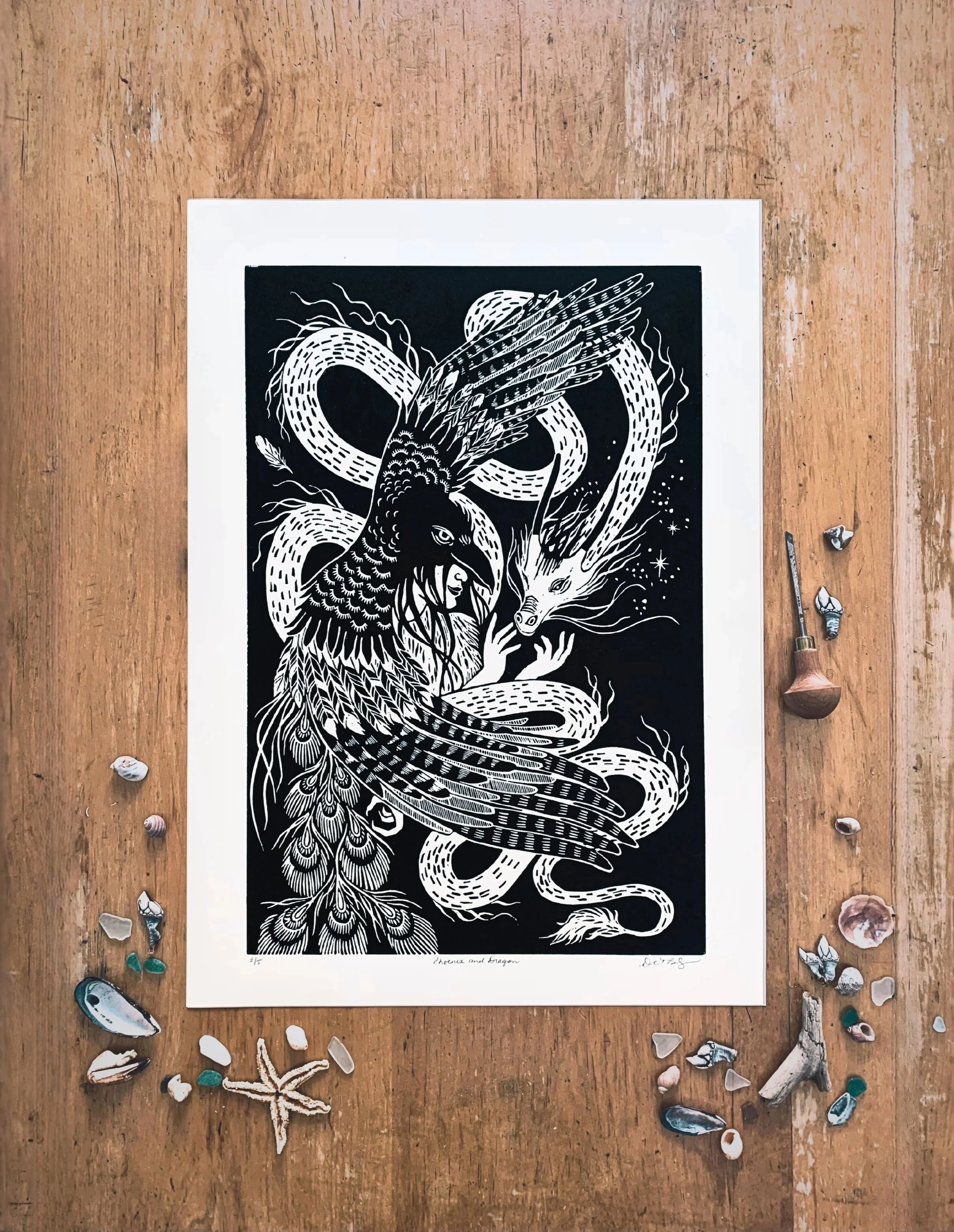
Hand printed on locally made archival printmaking paper
In our current world, estuarine complexity has become suspect; mangrove worlds feel unstable, as though ambiguity itself were a danger rather than fertile ground for generative courtships and all that might emerge through them. Yet our world has always been more intricate, more entangled, more alive, and more estuarine than these contemporary divisions allow us to see. To glimpse this “vanished” mythic mangrove landscape, we must dive beneath the surface of the water, where the ancient world still dreams. There, among reeds and buzzing insects, we may encounter the ancient courtship of Dragon and Phoenix and discover the mangrove for what it has always been: not a boundary between worlds, but a world of confluences and crosscurrents, entwined roots and moving waters, where life is continually remaking itself. Perhaps our stories, too, must learn to become estuarine. The mangrove mythos does not ask us to choose between land and sea, it asks us to listen for how each has shaped us. We are living shorelines, formed through countless encounters, carrying the traces of every tide that has passed through us—eroding and reshaping us, leaving layers, sediment, and life in its wake. The mangrove has always known that no single current tells the whole story, who we are is never fixed and permanent, but always in negotiation, always becoming. The earth has always known how to think in relationships, it teaches us that different currents of knowing can coexist without collapsing into one another, that life begins wherever one thing meets another and neither remains unchanged. Perhaps this is what the mangrove mythos, and the Dragon and Phoenix, have been whispering all along: the earth-water world is always dreaming, remembering, bearing witness to our becoming. The mangrove is all around us; we need only to open ourselves to the dream.
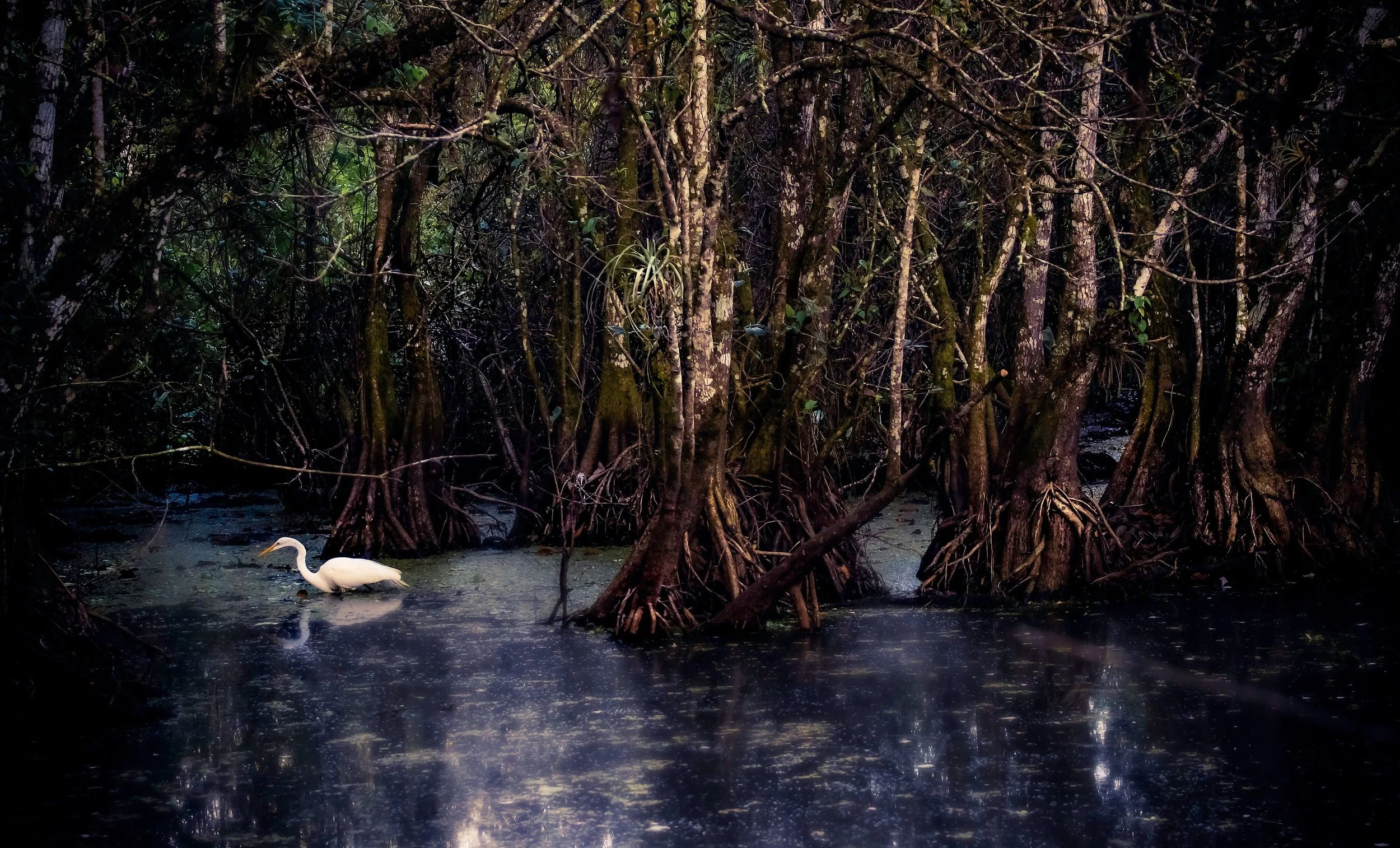
Mangrove. Photo Credit: raybilcliff on Pexels
What if myths are places where the earth dreams through us? Vietnam’s Dragon and Phoenix each embody a combination of earthly and aquatic qualities that echo the ancient mangroves, wetlands and estuaries that make up the coastal landscape from which these mythic beings emerge. In this courtship of human imagination and the earthly world, the land dreams herself into creaturely form, hatching more of herself into being in this marriage-place of worlds, a place of encounter and reciprocal becoming. What becomes possible when we open ourselves to the earth’s wild intelligence, allowing its ways of becoming to move through and shape the way we make sense of our present day stories and our lives?